



Highlights
- SuperGaming announced the Indus International Tournament in October 2024.
- The LAN was first postponed to May 2025, citing India-Pakistan border tensions during Operation Sindoor, then put on indefinite hold.
- By January 2026, the game that powered the tournament had been rebranded as Prime Rush and relaunched in Brazil.
In October 2024, game development studio SuperGaming made an announcement in front of the Indian gaming community that was hard to ignore. The Indus International Tournament would run from October 2024 to February 2025, feature four phases spanning homegrown grassroots players all the way to invited international teams, and carry a total prize pool of INR 2.5 Crore ($265,250). The most valuable player (MVP) would receive a custom-built Mahindra Thar. CEO Roby John and SuperGaming called it the biggest esports tournament in India.
Eighteen months later, the LAN grand finale has not happened. The INR 2 Cr prize pool for the main event at Drome Arena in Pune has not been distributed. The game itself has been rebranded and relaunched in Brazil.
SuperGaming has now provided its account of what happened.
What SuperGaming Promised
The announcement for the tournament arrived on October 10, 2024, six days before Indus Battle Royale's commercial launch on Android and iOS. SuperGaming had been building anticipation for the game since pre-registrations opened on the Google Play Store in January 2023. By the time of launch, pre-registrations had crossed 10M. Within two days of the commercial release, the game had surpassed 1M downloads.
IQOO
The Indus International Tournament was structured into four phases with escalating prize pools. The Homegrown phase offered INR 15L ($15,915) and ran from Nov 6 to Dec 3, 2024, with the top three teams qualifying for the grand finale. The Nationals phase offered INR 10L ($10,610). The Powerplay phase, open to professional esports teams, offered INR 25L ($26,525).
An International phase, exclusive to invited global teams, was scheduled for Nov 15 to Dec 30, 2024. The Grand Finale, a LAN event for the top 15 qualified teams, was scheduled for February 2025 with an INR 2 Cr ($212.2K) prize pool, later updated on the tournament page to May 18, 2025, at Drome Arena in Pune.
SuperGaming also announced a follow-on event: the Indus International Mahasangram, planned for October 2025, was positioned as the next chapter in what the studio described as its "Clutch India Movement," a year-long esports roadmap.
What the Game Actually Looked Like
The tournament announcements were made against a backdrop of a game that launched to a mixed reception. The game, even after its rebranding, is generating under $5K per month according to Sensor Tower estimates. For context, PUBG Mobile generated $29M in monthly global revenue in March 2026. Even accounting for differences in market scale and player base, the gap between SuperGaming’s early revenue numbers and the promised prize pool amount was substantial.
In December 2025, Roby John acknowledged in an interview with InsideSport that Indus had a daily active user base of around 100K across its games, a figure that covers SuperGaming's broader portfolio and not Indus specifically. He said the studio was not doing any active promotion and was holding back content for the global launch.
He also offered Outlook Respawn the clearest public diagnosis of what had gone wrong with Indus as a product: "We made Indus with kind of the competitiveness, structure, complexity of the Apex Legends product, because that's really the shooter that we really like. But the audience that we got was mostly Free Fire."
The admission by John was accurate. Free Fire's audience plays shorter sessions, on lower-spec devices, and expects a more accessible gameplay loop than Apex Legends-style complexity delivers. Building Indus for one audience and finding the other is not just a product design issue. It affects matchmaking times, competitive ecosystem depth, viewer engagement, and the sponsor confidence required to sustain an INR 2 Cr ($212.2K) LAN finale.
YouTube viewership data for the completed phases of the Indus International Tournament reveal that most of the streams got under 1K total views. By comparison, the BGMI Series 2024, peaked at over 274K concurrent viewers. The Battlegrounds Mobile India Series as a whole has since set a new record for the title with over 930M views. Indus' competitive events did not register in the same tier of viewership data.
What Happened to the LAN
On May 9, 2025, SuperGaming announced that the LAN Grand Finale, by then scheduled for May 18 at Drome Arena in Pune, had been postponed indefinitely in response to escalating tensions between India and Pakistan following Operation Sindoor, a brief Indian military strike across the Line of Control that escalated tensions between the two countries. The statement noted that international teams and guests had already committed to travel when the decision was made.
The geopolitical context was real. Operation Sindoor was a significant event, and the concern about international travel commitments was legitimate. SuperGaming is not alone in having postponed events during that period.
What the company's statement did not address was the trajectory of the tournament before May 2025. The grand finale had already been delayed from its originally announced February 2025 date. The Indus International Mahasangram planned for October 2025 also did not happen. Both pieces of the announced esports roadmap for Indus' first year were either postponed or cancelled.
In SuperGaming's response to Outlook Respawn, Prarthana Rai of the company's communications team confirmed that over INR 33L ($35,013) had been distributed in Pro Scrims and Pro League prize pools in the months following the May postponement, and that the four completed phases of the tournament had distributed over INR 50L to winning teams. Rai’s statement implies that the INR 2 Cr ($212.2K) grand finale prize pool and the custom Mahindra Thar have not been distributed.
SuperGaming's explanation also cited the PROGA regulatory environment as a contributing factor. "The Rules operationalizing it were only notified by MeitY on April 22, 2026," the response states, adding that "for the better part of a year, the industry and SuperGaming with it, operated without the procedural clarity needed to make long-term tournament and sponsorship commitments."
That framing deserves scrutiny. PROGA received presidential assent in August 2025. The LAN was postponed in May 2025, three months before PROGA even existed as law. The regulatory uncertainty that followed PROGA's passage is a real industry issue, but it did not cause the May 2025 postponement and cannot account for the February 2025 delay that preceded it.
Where SuperGaming's Attention Went
While the Indus LAN remained on hold, the studio was building something new. In January 2026, SuperGaming announced Prime Rush, a mobile battle royale developed in partnership with Spacecaps, the parent company of LOUD, Brazil's largest esports organization. Prime Rush launched in Brazil in March 2026 on both Android and iOS, with ranked seasons, a battle pass, and limited-time modes. The studio said additional LATAM markets would follow.
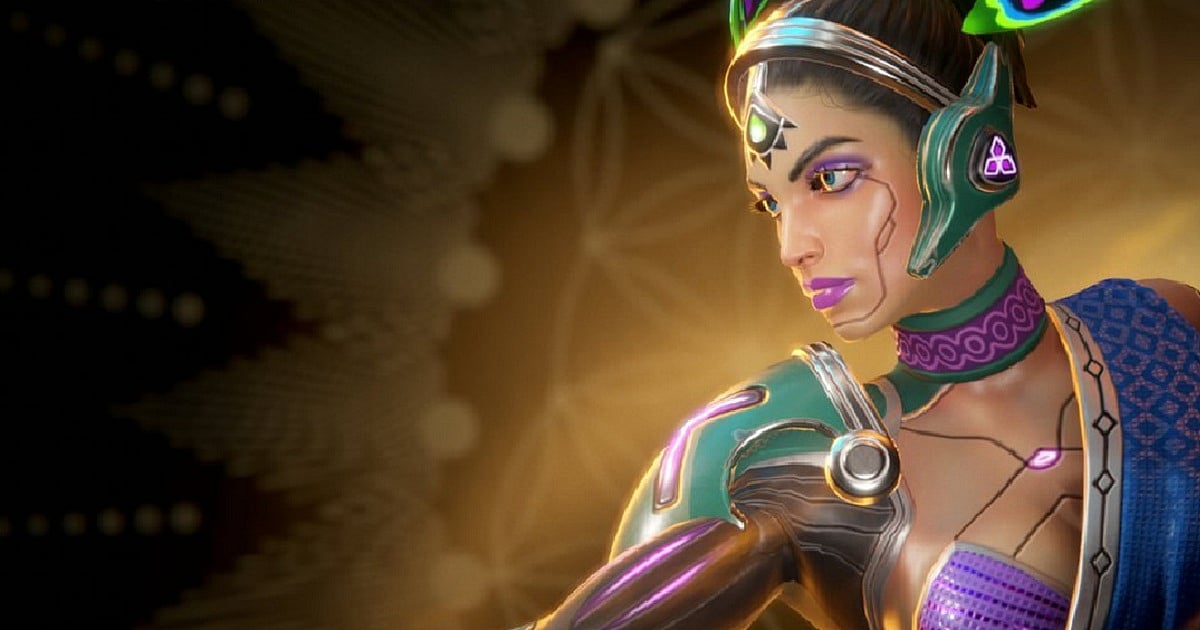
Prime Rush is built on the same core engine as Indus. The Cosmium extraction mechanic that Indus introduced is present in Prime Rush, where it functions as an alternate win condition alongside the last-squad-standing format. Characters, the map, and the cultural framing have been replaced: Indus' Indo-futurist Virlok setting gives way to a Brazilian favela environment with Brazilian-inspired heroes and abilities. The Indian game Instagram account, @indusgame, now redirects to Prime Rush content.
SuperGaming
In an interview with Outlook Respawn in February 2026, John explained that Prime Rush was built differently, with Brazilian players and creators involved in shaping gameplay, pacing, and progression from the outset.
The global expansion is presented by SuperGaming as the path back to a sustainable Indian esports ecosystem. In its response to this publication, the company said the Indus International Tournament LAN remains on hold until there is "the stability to deliver it at the standard these players deserve," and that completing the PROGA regulatory pathway for esports recognition, expanding Prime Rush globally, and building the partner and sponsor base required for a world-class tournament are the three current priorities.
The Community's Position
The Indian players who qualified through the Homegrown, Nationals, and Powerplay phases of the Indus International Tournament have been waiting since early 2025 for a grand finale that has not arrived. They were told the tournament would run from October 2024 to February 2025. It ran four of its five planned phases and stopped before the event that carried 80% of the total prize pool.
But the terms of the original announcement were specific. An INR 2 Cr ($212.2K) prize pool. A custom Mahindra Thar. A LAN finale at a named venue. Players qualified for those things. They were offered Pro Scrims instead.
The gap between what was announced and what was delivered raises a serious question. Was the esports commitment sized appropriately to the game's actual commercial trajectory, and whether the players who invested time in qualifying have received a clear answer on when, or whether, they will get what they were promised? SuperGaming says the LAN will happen when the pieces are in place, but we don’t have a clear answer on how long qualified participants will have to wait.