



Highlights
- Beginners can join major marathons like Global Game Jam or Indian events like BYOG to network and learn.
- Success requires a minimalist scope and using free assets from sites like Kenney.nl to finish within 48 hours.
- Jam prototypes often become portfolio gold and can evolve into commercial hits like SUPERHOT.
Imagine a weekend where you go from having absolutely nothing but an idea to holding a fully playable game in your hands. That is the magic of a game jam. For beginners, a game jam is not just a competition; it is a high-speed development laboratory. It is a space where you are allowed to fail, learn, and create without the looming pressure of a commercial release.
Whether you are a mass communications student exploring interactive media, a hobbyist, or an aspiring developer looking to break into the industry, game jams provide the perfect "time bubble" to bridge the gap between watching tutorials and actually shipping a product. Here is your complete guide on game jams for first-timers.
The Global and Indian Event Landscape
If you are ready to take your first step into rapid game development, the calendar is packed with major events tailored to welcome newcomers. Finding the right jam depends on whether you thrive in global online competitions or local, in-person collaborative environments.
- Global Game Jam (GGJ): The undisputed heavyweight champion of game jams, GGJ takes place every January. It draws over 40,000 participants worldwide and heavily emphasizes local gathering spots, making it the ultimate networking event for finding developers in your own city.
- Ludum Dare: As one of the oldest and most revered online jams, Ludum Dare runs twice a year. It offers a hardcore 48-hour solo "Compo" mode where all assets must be made from scratch, alongside a more forgiving 72-hour "Jam" track designed for collaborative teams.
- GMTK Game Jam & Brackeys Game Jam: The GMTK (Game Maker's Toolkit) Jam is an annual game-making marathon that draws thousands of entries by challenging creators with mechanics-focused themes like "Roles Reversed." Meanwhile, the Brackeys Jam, which runs twice a year, is widely considered the gold standard for beginners due to its deeply supportive, tutorial-driven community.
- The Booming Indian Community Jams: The Indian game development scene is experiencing a massive renaissance, offering incredible localized opportunities.
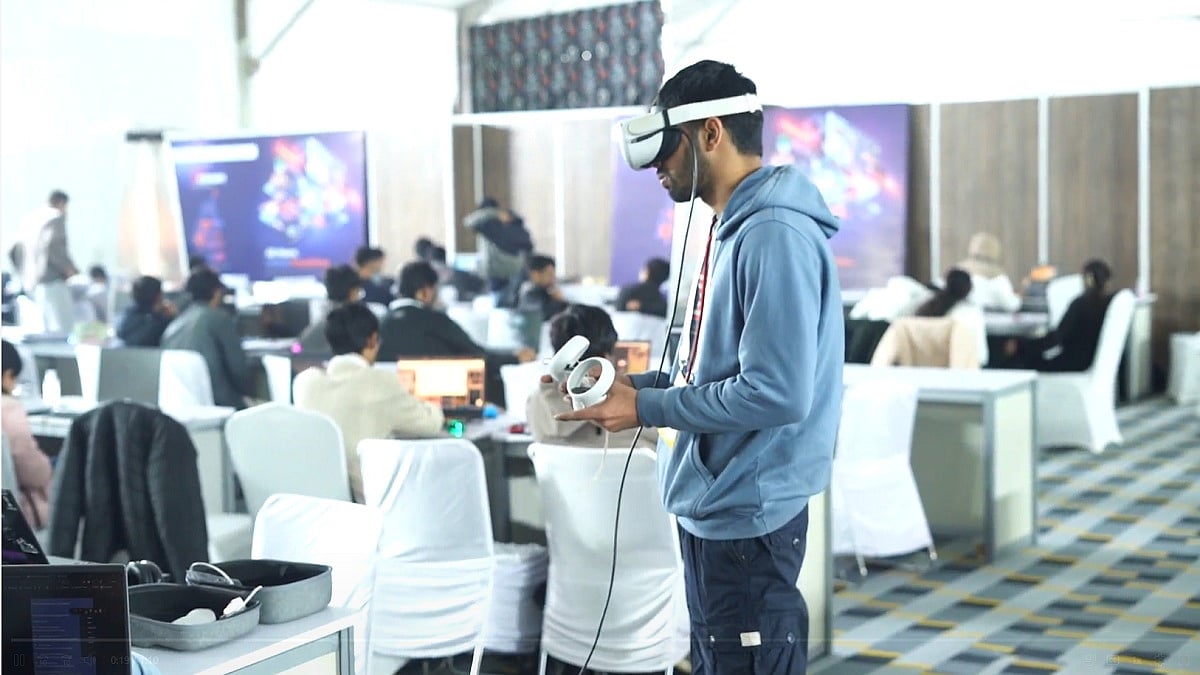
Build Your Own Games (BYOG): India’s longest-running jam and a major launchpad for local talent, frequently tied to the India Game Developer Conference (IGDC).
- Local Chapters: Active GGJ sites and indie showcases are popping up constantly, from Game Jam Jaipur 2026, highlighting student developers to communities like SAIK in Kerala, and providing essential mentorship and hands-on learning for first-timers.
Outlook Respawn
How to Join and Form Your Team
Joining a jam is incredibly simple and entirely free. Most modern organizers utilize the itch.io platform or official sites like ldjam.com for registration, team management, and final submissions.
Once you sign up, your immediate next stop should be the event's official Discord or community forum. If you are flying solo, that is perfectly fine—solo development grants total creative control. However, if you want to team up, dive into the community channels right as the jam starts. Pitch your complementary skills (programming, pixel art, sound design, or writing) or simply your enthusiasm.
The indie community is notoriously welcoming, and many veteran teams are happy to onboard newcomers. You also do not need expensive software; industry-standard engines like Unity, Godot, or GameMaker are free and perfectly suited for a 48-hour sprint.
Scope-Setting: The Golden Rule for Beginners
Once the surprise theme is revealed, your most crucial task begins: setting your scope.
As a beginner, you must keep your scope microscopic. Aim to build a single core mechanic, one level, and a simple aesthetic that fits the theme—think of a single-screen puzzle game or a basic platformer. Avoid sprawling narratives, RPG elements, or complex multiplayer networking. In the high-pressure environment of a game jam, a finished, playable game always beats an unfinished masterpiece. The golden rule of scoping? Once you think your concept is small enough and achievable, cut it in half anyway.
The Agile 48-Hour Survival Timeline
The timeline of a game jam is intense but entirely manageable with a solid plan. During Hours 0 to 4, you should brainstorm theme ideas and immediately prototype your core mechanic using simple placeholders. Moving into Hours 4 to 12, the goal is to build out a basic, playable version of the game while beginning to add early art and sound; after this, you must log off.
When you return for Hours 12 to 24, shift your focus to polishing the experience, playtesting with your team or friends, fixing bugs, and remembering to take necessary screen breaks. Finally, Hours 24 to 36 are dedicated to integrating final assets, creating a main menu, and submitting the game early. This agile plan purposefully leaves a large buffer at the end of the 48 hours to ensure you stay sharp, rested, and ready to iterate if last-minute bugs appear.
Common Mistakes to Avoid in the Trenches
When you join a jam, you can expect a weekend of caffeine-fueled creativity, Discord pings at 2 a.m., and exciting breakthroughs. However, you must navigate the classic first-timer traps:
- The Over-Scope: Cramming in too many features instead of sticking to one satisfying core loop.
- Skipping Playtests: Building a game that makes sense to the creator but is completely unfun, confusing, or broken for the judges and players.
- The Pixel-Perfect Trap: Spending five hours perfecting a single character animation while the actual game remains unplayable.
- The "Zombie" Developer: Ignoring sleep is a toxic myth. Staying up for 48 hours straight leads to severe cognitive decline and complex bugs that could have been avoided with a simple nap.
Team Crows
Free Assets for Quick Wins
You do not have to create everything from scratch. Embracing the "Asset Economy" can save you dozens of hours, allowing you to focus on gameplay and design.
- Kenney.nl: Nicknamed "Asset Jesus" by the community, this site offers thousands of high-quality, CC0 (public domain) 2D sprites, 3D models, and UI elements.
- OpenGameArt.org: A massive, collaborative treasure trove for open-source sprites, tilesets, and environmental art. Filter by license (CC0, CC-BY, CC-BY-SA, GPL).
- FreeSound.org: The ultimate database for audio snippets. Hunt for royalty-free music or search for sound effects. Perfect for finding specific sound effects like footsteps, explosions, UI clicks, and ambient sounds.
- Sfxr / Bfxr: Free, lightweight tools that allow you to generate retro 8-bit audio clicks, jumps, and explosion sounds instantly with just a few slider adjustments. The project includes libraries, HTML templates, and both ActionScript and JavaScript code.
Turning Jam Projects into Portfolio Gold
Participating in these events teaches rapid iteration, theme adaptation, and the invaluable ability to ship a product under pressure. You will gain tools proficiency, learn how to process real-time peer feedback, and build active ties within the gaming industry.
When the dust settles, your messy weekend project can become portfolio gold. Recruiters actively hunt for "vertical slices"—short but polished experiences that prove a developer can actually finish what they start. Take a few days post-jam to fix minor bugs, add an extra level, and capture a high-quality 60-second gameplay GIF. Upload a clean build to your portfolio and prominently tag it as "made in 48 hours." This showcases your ability to deliver under strict constraints.
Steam
From Weekend Prototypes to Global Hits
If you doubt the commercial power of a weekend prototype, industry history proves that game jams consistently birth massive, multi-million dollar hits.
- Surgeon Simulator, born at a game jam, went on to sell over 2 million copies.
- The innovative time-bending shooter SUPERHOT was so universally praised that it raised $100,000 in just 23 hours.
- Goat Simulator began as a physics joke prototype and eventually earned an astonishing $12 million.
- Massive cultural phenomena like Friday Night Funkin' (Ludum Dare) and Keep Talking and Nobody Explodes (Global Game Jam) all trace their roots back to a stressful, caffeine-fueled weekend.
As Justin Whitfort, the lead programmer of the hit multiplayer shooter Screencheat, noted about his own successful project: the core idea "came about by accident earlier this year at the Global Game Jam." These stories prove that game jams are more than just practice. The small, messy, chaotic prototype you build this weekend could very easily become the foundation of your entire career.