




Highlights
- Gamers triggered a massive PS5 sales surge to beat the April 2 price hikes, including the $899.99 PS5 Pro.
- Sony blamed the increases on global supply chain woes and a severe memory chip shortage driven by generative AI.
- Despite the higher cost, PlayStation dominates with a 47.4% global market share and nearly 100 million units sold.
Gamers across the United States have been scrambling to get their hands on a PlayStation 5, triggering a massive, record-breaking surge in console sales. But this wasn't driven by a must-play new game release. Instead, anxious buyers were racing against the clock to secure their systems before Sony's staggering price increases was officially took effect on April 2. In an unusual reversal of how console lifecycles normally work, where hardware usually gets cheaper over time, this looming deadline pushed eager consumers straight to the checkout line to dodge the extra costs.
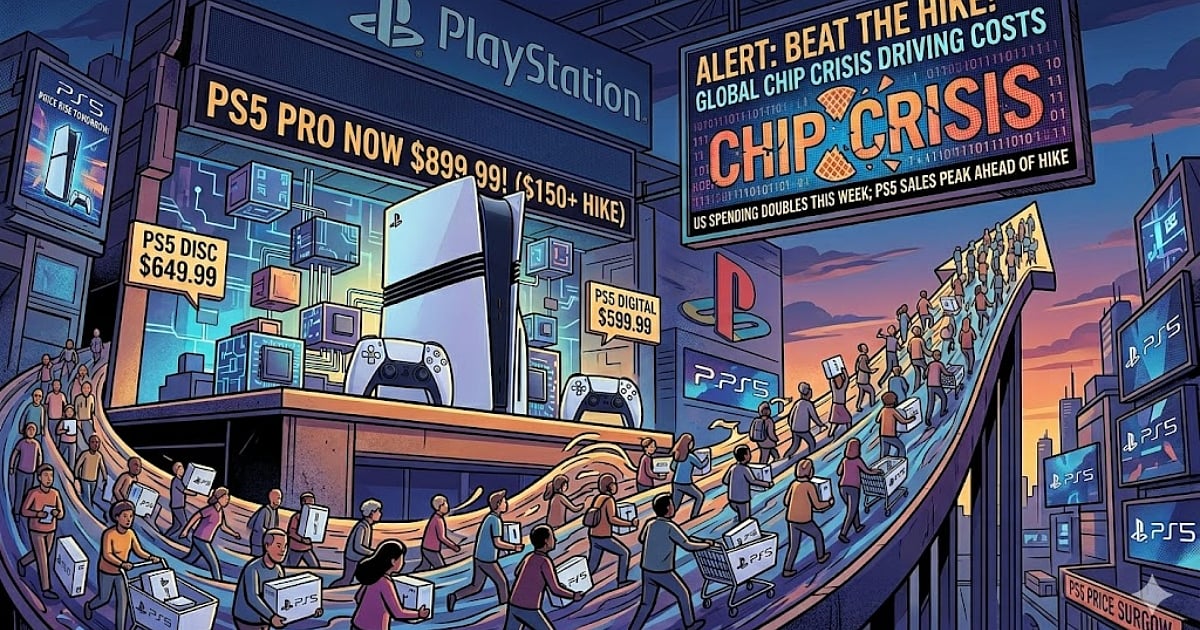
The rush to retail makes perfect sense when you look at the sudden hit to gamers' wallets. At the end of March, Sony announced that the base PS5 with a disc drive would jump by $100, landing at a hefty $649.99, while the digital-only edition climbed to $599.99. The premium PS5 Pro model took the hardest hit, spiking by $150 to a staggering $899.99. Similar hikes impacted players globally, including a £90 (around $120) bump in the UK, as per Gameindustry.biz.
Sony Interactive Entertainment vice president Isabelle Tomatis stated at the time that this was a necessary step to ensure the company could continue delivering innovative, high-quality gaming experiences to players worldwide amid continued pressures in the global economic landscape.
This looming deadline absolutely worked to spur immediate demand. According to Mat Piscatella, a senior director and industry advisor at retail tracking firm Circana, US spending on video game hardware during the first week of April almost doubled compared to the exact same week a year ago. Furthermore, PlayStation 5 unit sales and dollar revenues reached their highest peaks of 2026, leading up to the hike. Piscatella noted that this frenzied buying spree was entirely expected as players impulsively stocked up to beat the buzzer.
PlayStation
Global Supply Chain Woes and the Chip Crisis
Why is playing on PlayStation suddenly becoming a luxury? Sony points to a perfect storm of global supply chain woes. A severe hardware shortage, largely fueled by the massive boom in generative AI and a subsequent memory chip crisis, has placed unprecedented stress on component manufacturers. These headaches have been worsened by conflicts in the Middle East, affecting resource availability. The memory shortage crisis is so severe that recent reports suggest Sony is even considering delaying the rollout of its next-generation console entirely to cope with the lack of materials.
Interestingly, this sudden hardware boom follows a distinct period of decline for the console's physical sales. In February, Sony reported its financial results for the nine months ending December 31, 2025. While the company's overall operating income rose by 21%, and the Game and Network Services segment saw a massive 27% increase to $2.6 billion USD, actual PS5 hardware unit sales had dropped by 15.7%. This recent April markup also stings for international fans who already endured a prior price hike just last April, when Sony increased the cost of its consoles across Europe, the UK, Australia, and New Zealand.
Despite the incredibly loud frustrations voiced by the gaming community online, the pre-hike checkout rush proves that the appetite for the PS5 is still incredibly strong. The console continues to absolutely dominate the market, hitting 24.8 million units sold by the end of the 2026 fiscal year and capturing a massive 47.4% share of the global pie, as per Techi. With lifetime sales hovering around the 90 to 100 million mark, PlayStation's grip on the industry remains unshaken, even as the price of admission reaches new heights.