




Indian Brand Lumio Courts Gamers With Vision 9 Television
A one-year-old brand matches flagship specs at a lower price. Service is the next question

Highlights
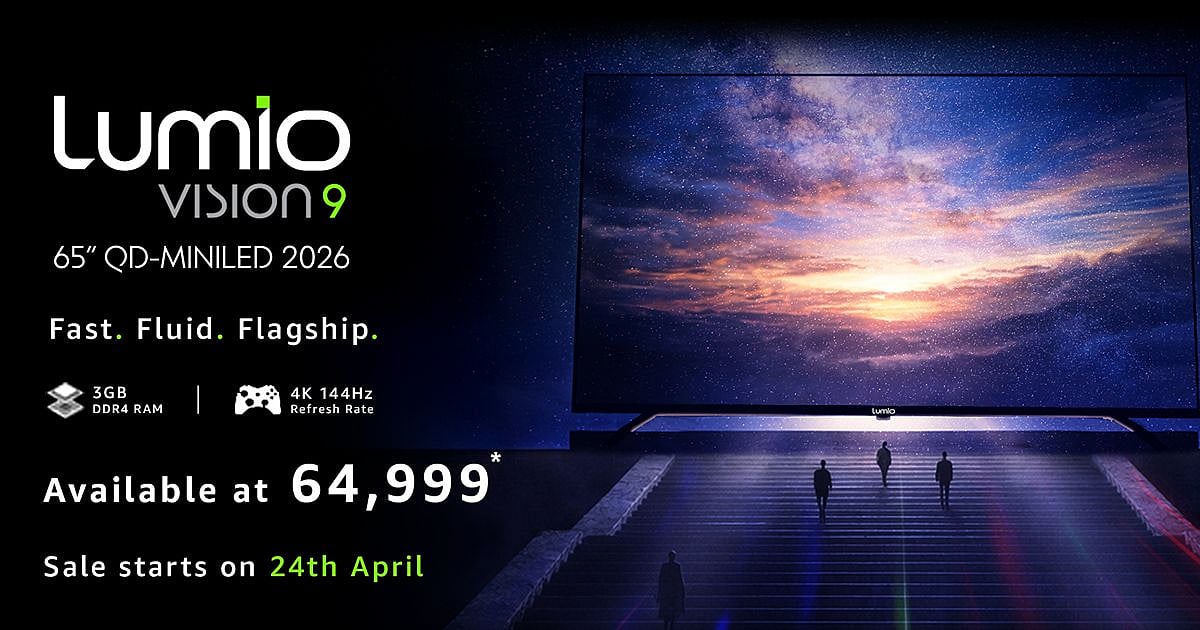
- Lumio will begin selling the 65-inch Vision 9 on April 24 at ₹72,999, or ₹64,999 after launch offers, with a QD-MiniLED panel and 4K 144Hz refresh rate aimed at console and PC gamers.
- On paper the set matches the gaming-relevant specifications of Sony's Bravia 7 and Bravia 9 flagships at a fraction of their price, with a dual-subwoofer audio system that produces 38Hz of bass at 70 decibels.
- The real test is service. Co-founder Kailash Sankaranarayanan acknowledges after-sales repairs currently take seven to 14 days, a window Lumio is trying to close through remote diagnostics and more spare-parts warehouses.
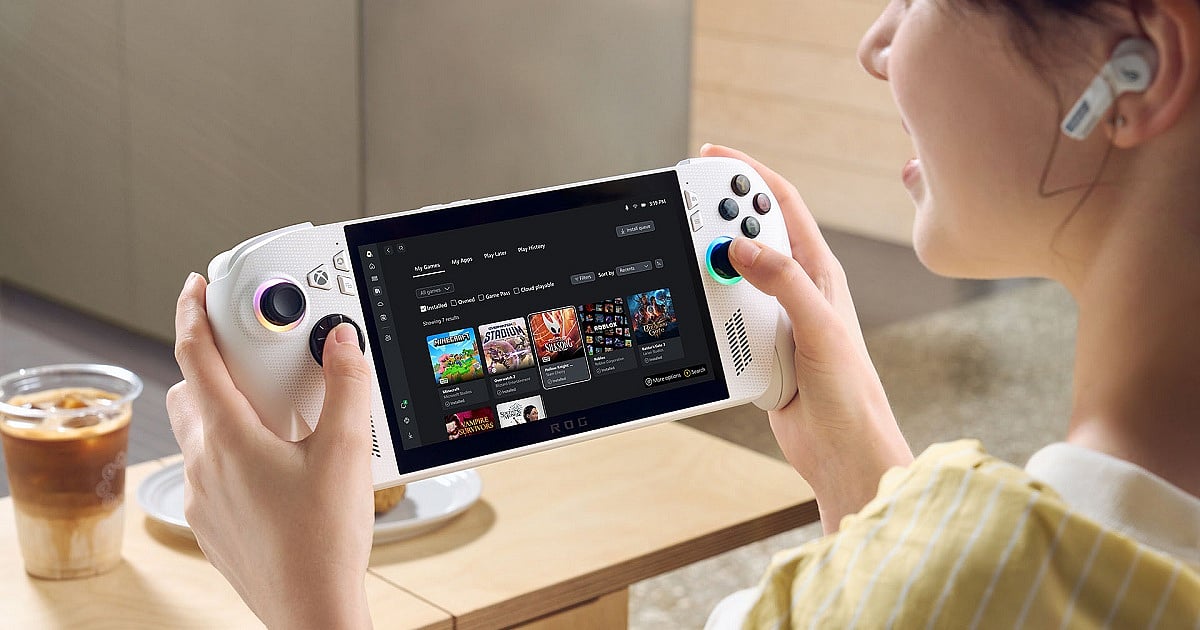
Lumio, the India-based consumer electronics brand that launched a little over a year ago, said it will begin selling the Vision 9, a 65-inch QD-MiniLED television priced at ₹72,999, or ₹64,999 after launch offers, on April 24. The company, which built its early following among audio-visual enthusiasts, is now courting a segment most of its larger rivals have largely ignored at this price band: console and PC gamers.
The bet is narrow by design. Kailash Sankaranarayanan, the company's co-founder and chief operating officer, said in an interview that Lumio had avoided gaming when it launched its first line of televisions, focusing instead on general audiences. That changed, he said, after customers began asking for larger panels and higher refresh rates that could drive PlayStation 5 consoles and gaming PCs. "It only meant that it was right for us to go and cater to their needs," Sankaranarayanan said, describing the typical Vision 9 buyer as someone aged 35 to 45, usually a PS5 owner who cycles through several games but is not an esports competitor.
On paper, the Vision 9 closes the gap with more expensive Japanese and Korean flagships on the specifications that matter to gamers. The refresh rate has more than doubled from 60Hz on last year's model to 144Hz at 4K, and the set carries 3GB of DDR4 memory. Sudeep Sahu, the company's head of product, said the television had been benchmarked against Sony's Bravia 7 and Bravia 9, not the entry-level sets, on color accuracy and coverage, and that its ability to produce 38Hz of bass at 70 decibels through a dual-subwoofer array made it unusual for a television in its price class. "You will not find all of this at that price point, like ever, from any other brand," he said.
That is a bold claim, and one the market will test. Competing 65-inch televisions from LG and Sony with comparable refresh rates and HDR performance typically sell for considerably more in India, though they come with mature software ecosystems, widely accepted calibration standards and service networks refined over decades. Lumio's pitch rests on matching the specifications without matching the price.
The company is also leaning on software to differentiate the set. A feature it is calling Project Neo, due to arrive later this year, will let users ask the television for content recommendations through messaging apps like WhatsApp, Instagram and Telegram, including filters that go beyond conventional platform search. Sankaranarayanan described using it to pull up episodes of "Modern Family" suitable for viewing with his 12-year-old daughter, and said the software would eventually let users forward Instagram Reels or YouTube Shorts to a watchlist on the television.
Neither feature is available at launch, and Lumio only demoed an alpha version of the product for us. Whether Project Neo becomes a useful discovery tool or another lightly used voice layer is an open question, and one gamers, who tend to spend their time inside console dashboards rather than smart-TV interfaces, may care less about than the core display.
Service is the harder test
Buyers in India have long paid a premium for Sony, Samsung and LG partly because those brands operate dense service networks and predictable warranty experiences, and a new entrant asking customers to spend ₹64,999 on a single screen has to answer for what happens when something breaks. Sankaranarayanan said Lumio has built out about 300 service centers for televisions and another 200 for projectors, and has served customers in more than 5,600 pin codes. The company aims to complete 70% of installations within one day of delivery, and he acknowledged that after-sales repairs currently take between seven and 14 days to resolve.
That is a long window, and Sankaranarayanan said it is the area Lumio is working hardest to compress. The company is distributing spare parts across more warehouses and building remote-diagnostic software so a portion of service calls can be handled without a technician visit. Whether those investments land will determine more about the brand's trajectory than any spec sheet. A customer willing to take a chance on a one-year-old label at ₹64,999 is making a calculation about risk as much as picture quality, and the arithmetic only holds if the television gets fixed quickly when it fails.
Lumio's broader ambition is larger than a single launch. Asked where the company would be in five years, Sankaranarayanan said he wanted Lumio to be remembered as the brand that "disrupted the home entertainment" category. Sahu put it more specifically: the company wants to be "the default choice in the premium home entertainment" brand. That is crowded territory.
The Vision 9 gives the company a credible product to argue with, and a gaming-first positioning the incumbents have been slow to occupy at this price band. The harder argument, that Lumio will be there to service the television for as long as a buyer expects it to last, is the one still being written.

Author
Vignesh Raghuram is the Editor of Outlook Respawn, where he leads editorial strategy across gaming, esports, and pop culture. With a decade of experience in gaming journalism, he has established himself as a trusted voice in the industry.