




Highlights
- The latest sales figures from MU:DS highlight a wider shift in how Korea is monetizing its cultural heritage.
- Old artifacts are gaining renewed commercial value via modern K-pop consumer trends.
- Strong demand suggests museum retail is emerging as an unexpected pillar of the K-culture economy, with institutional expansions being planned outside.
The National Museum of Korea’s merchandise brand, MU:DS, has set commercial records, generating ₩21.8 billion (~ $14.5 million USD) in MU:DS’s first-half sales for 2026. This depicts a 90% increase from the ₩11.48B (~ $7.6M) recorded during the same period last year. The upward financial trajectory shows that traditional Korean heritage souvenirs can also complement modern pop culture.
According to data from the National Museum Foundation of Korea, the staggering growth of these MU:DS museum goods has already surpassed the brand's total annual revenue for 2024. Since the launch of the National Museum Foundation of Korea (NMF) in 2004, the MU:DS brand has grown steadily, crossing ₩10B (~ $6.66M) in annual sales for the first time in 2022 while hitting a record ₩41.3B (~ $27.5M) last year. This rapid pace highlights how effectively the National Museum gift shop has capitalized on the global expansion of K-culture, making historic artifacts highly sought-after Korean cultural merchandise.
BTS MU:DS Collaboration Fuels Museum Merchandise Sales
An important catalyst for this commercial boom is the strategic utilization of the K-pop fandom. In March 2026, a highly anticipated BTS museum collaboration rocked the market. The exclusive BTS MU:DS collaboration collection, released ahead of the group’s showcase at Gwanghwamun Square, drew creative inspiration from historical artefacts like "The Divine Bell of King Seongdeok," which is also sampled in BTS's track No. 29 from their Arirang album. The collection generated over ₩43M (~ $28,488.62) in sales within its first two days of preorders alone.
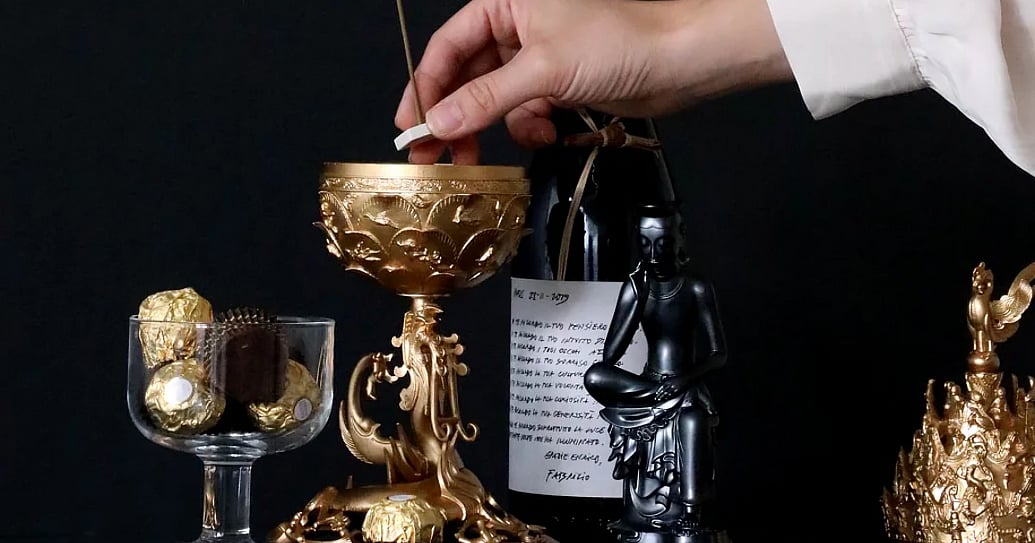
Individual celebrity influence also acts as a demand anchor for many legacy items. An example of this is the Pensive Bodhisattva miniature, a contemporary replica of National Treasure No. 78. This Pensive Bodhisattva replica achieved viral status after it was revealed that BTS’ RM owns two of the figurines, thus turning it into an undisputed best-seller. The iconic piece sold over 12,000 units in the first half of this year alone, thus pushing cumulative sales past 60,000.
Image Credit: MU:DS, National Museum of Korea
Beyond the RM BTS museum merchandise connection, other popular Korean cultural heritage products like the Dancheong keyboard featuring traditional multicolored woodwork patterns, a wine stopper shaped like Admiral Yi Sun-sin’s hat, and a color-changing glass set with a drunk scholar on its exterior, are also driving retail traffic.
Image Credit: MU:DS, National Museum of Korea
MU:DS Eyes Global Expansion After Record Attendance
This strong consumer demand directly aligns with booming attendance at the National Museum of Korea, which welcomed 3.26M visitors between January and May, up from 2.24M recorded at the same period last year. According to Yonhap, museum officials expect annual attendance to reach or top 6M for the second consecutive year. Simultaneously, shopping by foreign tourists in Korea also doubled to ₩1B (~ $6,64,299.60), driven by global demand for museum merchandise in Korea.
Moving forward, cultural authorities aim to leverage this momentum to widen their international footprint. "We will strengthen our brand's competitiveness so that people around the world can experience the value of Korea's cultural heritage in their daily lives," said Choung Yong-suk, President of the National Museum Foundation of Korea, as noted by Yonhap. As MU:DS prepares to expand into overseas markets next, industry stakeholders, including K-culture fans, wait to see if it can mirror the staggering local success on the global stage.