




From Unity to LiveOps, here is your blueprint for a career in gaming industry.
Game Development Careers: Skills You Need Beyond a Degree
Unlock careers in the Gaming sector: Master the Game Production Pipeline, Unity, and LiveOps to thrive in India’s $6.8B mobile gaming and 3D art market.

Highlights
- India’s AVGC sector is a government-backed powerhouse, projected to need 2 million skilled professionals by 2030.
- Success requires mastering specific roles like Game Design, C++/C# Programming, or 3D Art within the production lifecycle.
- Aspiring creators must focus on a single discipline and build a hands-on portfolio to thrive in LiveOps and development.
The video game industry is no longer just a hobbyist’s pastime; it is the undisputed heavyweight champion of the global entertainment world. Generating a staggering $188.8 billion USD in 2025 and projected to eclipse $205B by 2026, according to Newzoo. Gaming now makes more money than the global film and music industries combined. For anyone looking to turn a passion for gaming into a career, there has never been a better time. And if you are in India, you are standing at ground zero of a massive boom.
The 2026 Union Budget of India explicitly highlighted the AVGC (Animation, Visual Effects, Gaming, and Comics) sector as a macroeconomic growth engine. Backed by a ₹250 crore initiative, the government is establishing AVGC Content Creator Labs across 15,000 schools and 500 colleges to build talent early. With India’s AVGC market projected to hit $6.8 billion by 2026 and the country holding the title of the world's largest mobile gaming market by app downloads, the industry will need roughly 2 million skilled professionals by 2030.
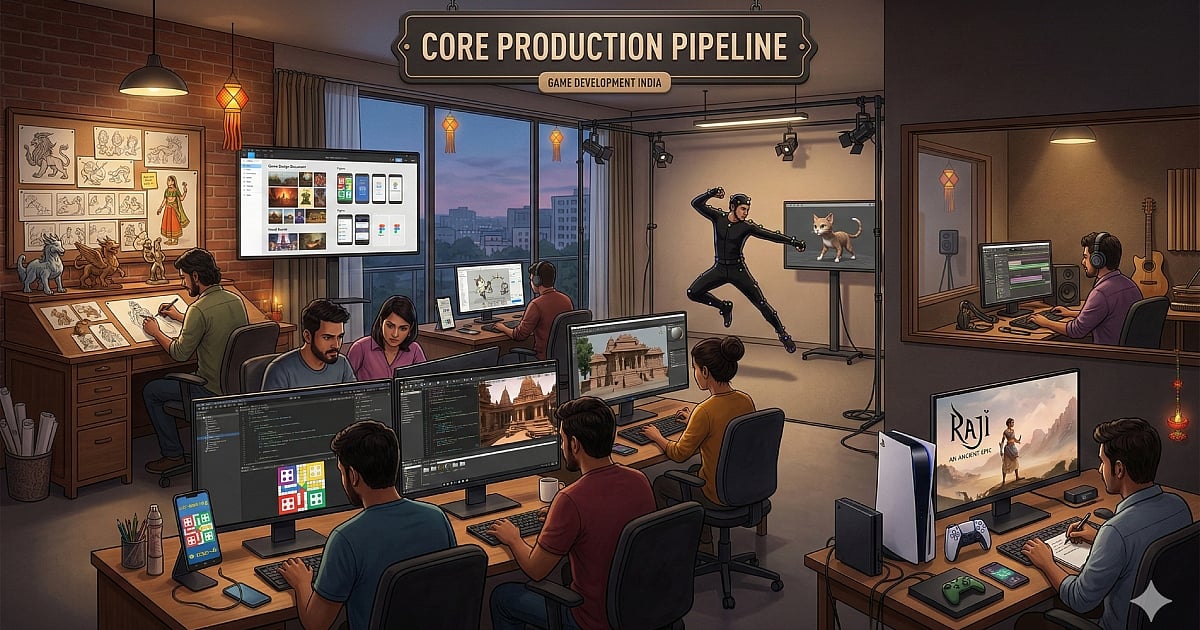
But playing games and making them are two entirely different beasts. Degrees alone won't get you hired. Studios want hands-on specialists who understand the Core Production Pipeline. Here is your foundational cheat code to understanding how a modern video game is brought to life, step by step.
1. Concept & Pre-Production (Game Designers)
Every billion-dollar franchise begins as a fragile idea. During the concept phase, teams don't write code; they write rules. Game Designers act as the architects. They conceptualize the narrative flow, character abilities, and the mathematical probabilities that keep a game fair and fun.
The Focus: Crafting "Gameplay Loops"—the rhythm of player actions and rewards. In a massive game like Fortnite, the loop is "Scavenge, Survive, Build, Shoot." In mobile hits like Subway Surfers, the loop is tightly compressed: "Run, Dodge, Collect, Upgrade."
The Tools: Designers use visual tools like Figma to map out user interfaces (UI) and design documents to communicate their ideas to the rest of the team. Their ultimate goal in this phase is to build a "Vertical Slice," a highly polished, fully functional 15-to-30-minute segment of the game that proves the idea is actually fun before millions of dollars are spent.
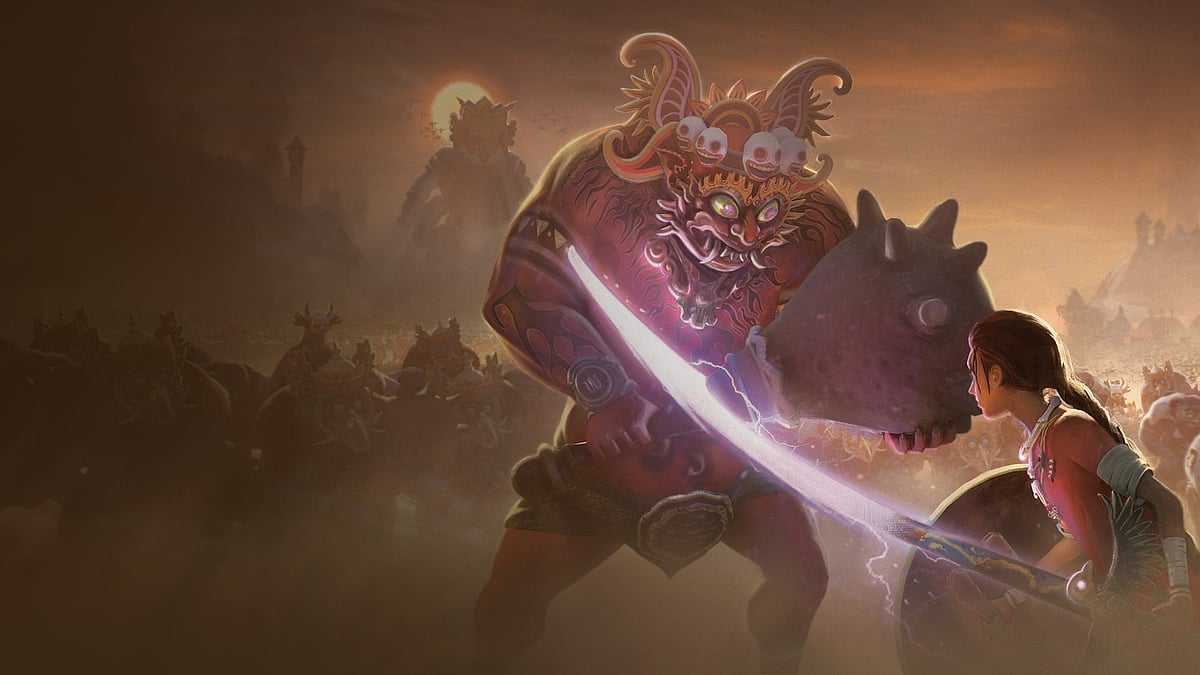
When Pune-based Nodding Heads Games created Raji: An Ancient Epic, they spent months in pre-production studying Indian mythology, Pahari paintings, and Balinese architecture. They didn't just start building; they created a highly polished "Vertical Slice"
to showcase their unique Indian cultural setting. This demo was crucial in securing funding and eventually getting the game featured by Nintendo globally.
Nodding Head Games
2. Production & Engineering (Programmers)
If designers write the blueprint, Programmers and Developers pour the concrete. This is where the game is actually built using complex software frameworks called Game Engines. Programming in games is essentially creative problem-solving disguised as mathematics.
The Focus: Translating ideas into playable reality. You will write code (usually C++ or C#) to make characters move, enemies attack, and menus function.
The Tools: Two titans dominate the industry:
Unreal Engine 5 (UE5): The king of blockbuster, high-graphics (AAA) games. It uses C++ and a visual coding system called "Blueprints."
Unity 6: The undisputed champion of mobile games, 2D games, and indie development. It uses C# and is the engine behind massive Indian hits.
Independent developers often have to invent brilliant hacks to make games work. For the indie game Fruitbus, developers wanted a physics-based cooking system inside a moving vehicle. But calculating the physics of a frying pan bouncing inside a bus driving 60mph caused the game to crash.
The programmers' solution? They processed the cooking physics on a hidden, stationary map off-screen, and visually projected the results back into the moving bus—a trick they dubbed "Quantum Entanglement."
Unity is the heartbeat of Indian game development. Ludo King (by Mumbai-based Gametion) used simple mechanics programmed efficiently in Unity to achieve over 1 billion downloads globally. Their code was optimized to ensure the game ran flawlessly on low-end, budget Android phones, which was the secret to dominating the Indian market.
3. Visual Identity (Artists & Animators)
While the code hums in the background, 3D Artists, Concept Artists, and Animators construct the visual world. They build everything from the dirt on a character's boots to the towering skyscrapers in the background.
The Focus: Creating a cohesive art style that fits the gameplay. Today, AI tools are starting to help artists generate background assets faster, but human creativity dictates the style.
The Tools: Industry standards include Maya and Blender (for 3D modeling), ZBrush (for high-detail sculpting), and Substance Suite (for painting textures).
Realism isn't always the right choice. For the hit indie game Little Kitty, Big City, animators completely rejected realistic motion-capture data for the cat because it felt boring to play. Instead, they hand-animated the cat like a classic cartoon character. The result felt much more authentically "cat-like" and playful to the audience.
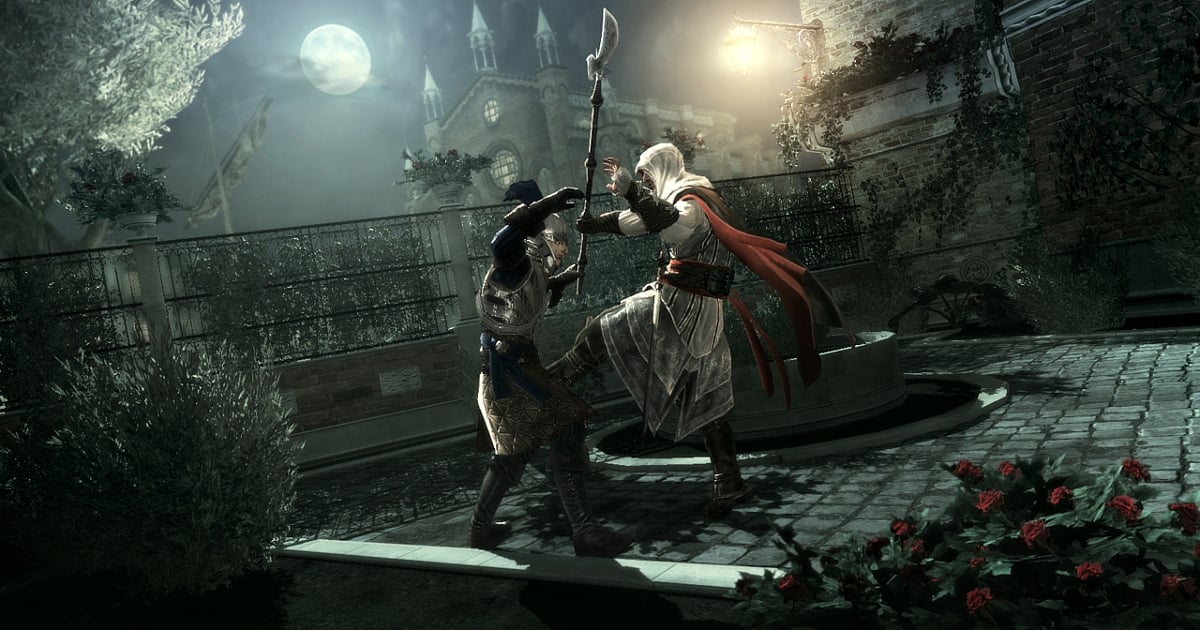
India is a global powerhouse for 3D art. Indian studios like Lakshya Digital and Dhruva Interactive (now part of Rockstar Games) provide world-class 3D art and environmental modeling for massive global hits like Elden Ring, Halo, and Assassin’s Creed. Aspiring artists in India have a direct pathway to working on the world's biggest games.
Steam
4. Post-Production: (Audio & QA)
As the game nears launch, it enters post-production. This phase is about polishing the experience, making the world sound alive, and breaking the game on purpose to fix bugs.
The Focus: Sound Designers create adaptive audio that reacts to what the player does. Quality Assurance (QA) Testers methodically play the game to find software glitches, ensuring it doesn't crash on launch day. (Note: QA is heavily relied upon as a great entry-level job to get your foot in the door.)
The Tools: Audio engineers use middleware like Audiokinetic Wwise or FMOD to plug sounds directly into the game engine.
In Avatar: Frontiers of Pandora, the audio engineers didn't just record a generic climbing sound. They scripted the audio engine to dynamically calculate the real-time length of a vine the player was climbing. The tension, creaking, and friction sounds changed organically based on exactly where the player was hanging.
5. Release & Live Operations (LiveOps)
Shipping a game used to be the finish line. Today, it’s just the starting line. The modern industry relies heavily on "Games as a Service" (GaaS).
The Focus: Live Operations (LiveOps) Managers and Producers oversee the "Metagame"—the continuous stream of new seasons, cosmetic outfits, and battle passes that keep players logging in daily for years. It requires a constant, active conversation with the community.
For the zombie survival game Dying Light 2, developers processed over 1,500 player feature requests from social media, moving them directly into the programming pipeline. Major gameplay changes were built entirely from this community feedback loop.
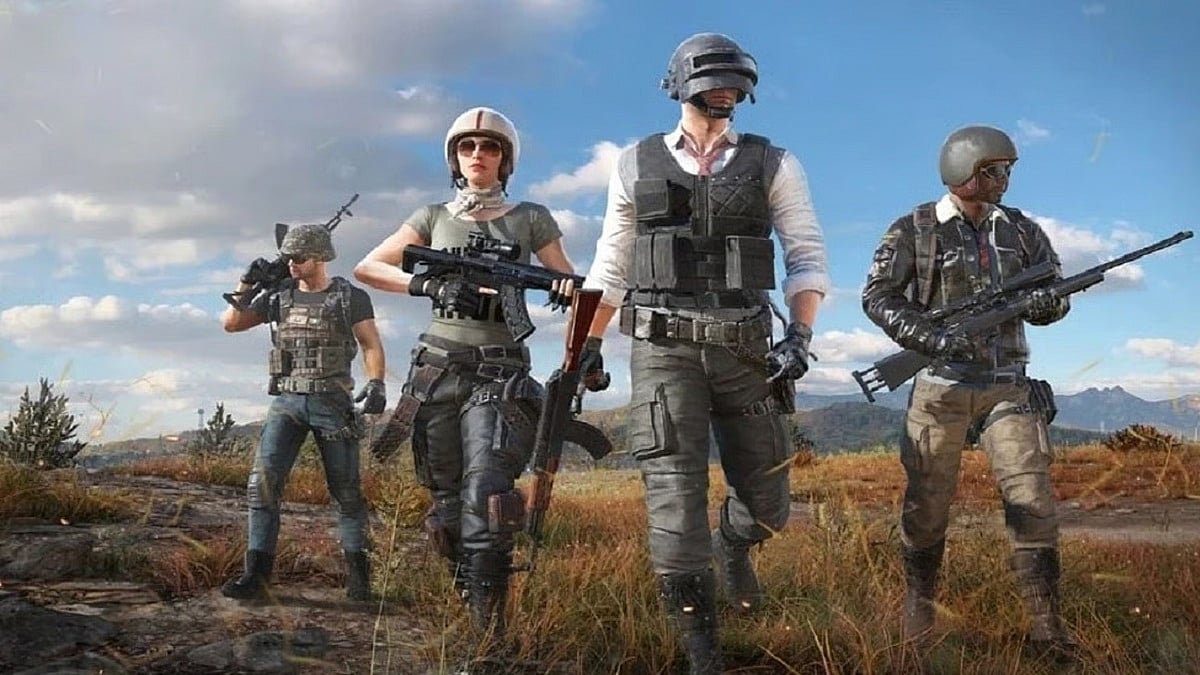
LiveOps is the lifeblood of games in India. Titles like BGMI (Battlegrounds Mobile India) and Free Fire retain millions of daily players by hyper-localizing their LiveOps. They introduce Diwali-themed events, Bollywood voice packs, and cricket-themed outfits, proving that cultural relevance is the ultimate retention tool.
KRAFTON
How to Start Your Journey
The core production pipeline is a monumental orchestration of art, psychology, and computer science. If you want to break in, don't try to learn everything at once. Pick one discipline, Design, Programming, Art, or Audio, and start building a portfolio today.

Author
Krishna Goswami is a content writer at Outlook India, where she delves into the vibrant worlds of pop culture, gaming, and esports. A graduate of the Indian Institute of Mass Communication (IIMC) with a PG Diploma in English Journalism, she brings a strong journalistic foundation to her work. Her prior newsroom experience equips her to deliver sharp, insightful, and engaging content on the latest trends in the digital world.
Krishna Goswami is a content writer at Outlook India, where she delves into the vibrant worlds of pop culture, gaming, and esports. A graduate of the Indian Institute of Mass Communication (IIMC) with a PG Diploma in English Journalism, she brings a strong journalistic foundation to her work. Her prior newsroom experience equips her to deliver sharp, insightful, and engaging content on the latest trends in the digital world.