Tencent Commits Over INR 100M to India's Gaming Talent Pipeline
Tencent Commits Over INR 100M to India's Gaming Talent Pipeline
Tencent has signed two three-year MoUs, committing over INR 100M ($1.043M) to build India's gaming and AVGC talent ecosystem.

Highlights
- Tencent signed three-year MoUs with SEPC and GDAI on May 15, committing over $1M USD in resources toward India's AVGC sector.
- Initiatives include a National Game Jam, Train-the-Trainer programs for college educators, and startup mentorship.
- Tencent is looking to involve over 10K students annually in its game jams.
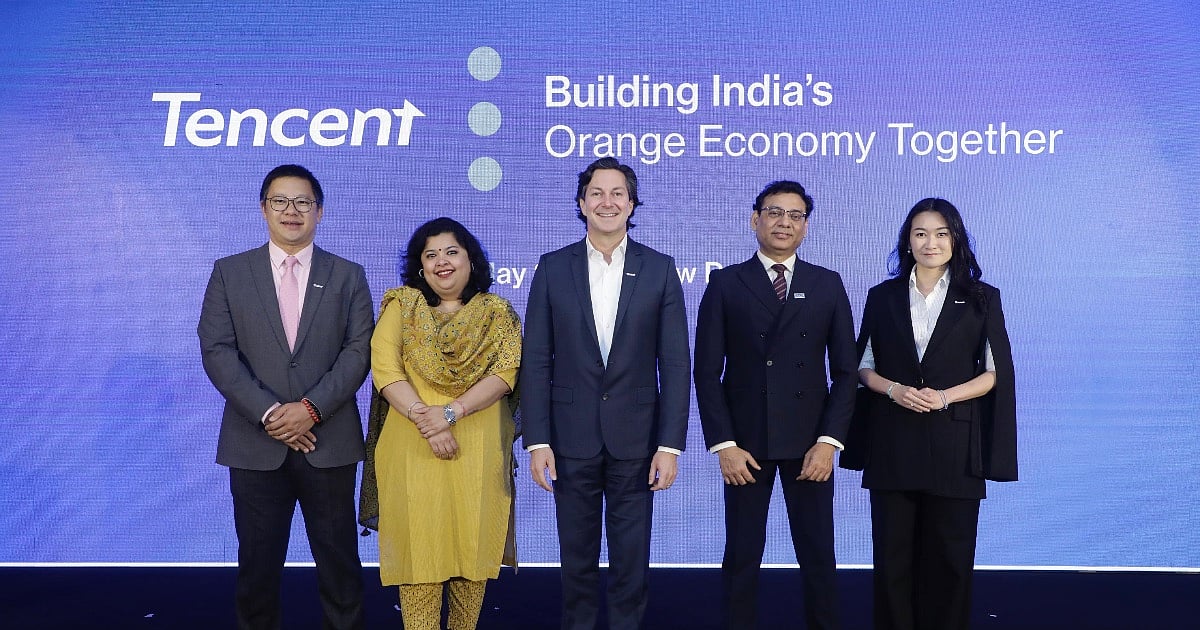
Tencent has made its most formal commitment yet to India's gaming and creative technology sector, announcing two three-year partnerships and an initial outlay of over INR 100 million ($1.043M) in resources and programs. The announcement was made at the Tencent: Building India's Orange Economy Together conference in Delhi on May 15, which brought together government officials, industry bodies, animation, visual effects, gaming, and comics (AVGC) institutions, and gaming ecosystem leaders.
The two agreements were signed with the Services Export Promotion Council (SEPC) under the Ministry of Commerce and Industry, and with the Game Developers Association of India (GDAI). They are aimed at strengthening India's talent pipeline in animation, visual effects, gaming, and comics sectors. Together, these sectors have been branded by the government as the "Orange Economy."
Breaking Down Tencent’s Partnerships
The Memorandum of Understanding (MoU) with the SEPC is focused on national capacity building, facilitating industry dialogue, and helping Indian AVGC companies access international markets and value chains. Dr. Abhay Sinha, Director General of SEPC, present at the event as the Guest of Honor, framed the collaboration as directly tied to India's export competitiveness. He said, "The AVGC sector is an important driver of India's services exports and creative competitiveness." Sinha added, "Our future potential collaborations with Tencent will aim to help strengthen industry capabilities and offer more opportunities for Indian companies and professionals in the international market."
The GDAI partnership is more operationally specific. It includes a National Game Jam targeting over 10K students annually and Train-the-Trainer programmes reaching educators across colleges. Tencent will also participate in the Indian Game Developers Conference. The intent is to create structured pathways from student interest to industry-ready skills, addressing a gap that has long been identified as a bottleneck in India's game development ecosystem. Studios here have struggled to find developers with production-ready skills, often losing talent to service-sector jobs or overseas opportunities before it can be retained locally.
Shruti Verma, CEO of GDAI, described the moment as significant for where India's gaming industry is headed. "India is at a defining moment in its gaming journey, with the opportunity to emerge as a global hub for game development and interactive entertainment," Verma said. "Building globally competitive gaming talent from India will be key to shaping the next phase of the country's digital and creative economy."
Beyond the two formal MoUs, Tencent also indicated it would explore partnership opportunities with broader institutions covering internships, professional exposure, and knowledge exchange. The company also used the event to reference the India launch of Honor of Kings, framing it as part of a longer-term commitment to building local gaming, esports, and content creator communities rather than simply entering the market as a publisher.
Tencent’s India Ambitions
The timing of Tencent's investment push is not a coincidence. India's gaming market has reached a scale where it can no longer be treated as an emerging opportunity on a distant horizon. According to Niko Partners, India is the fastest-growing gaming market in Asia and MENA, with player spending projected to reach $1.5B by 2028 and the gamer base expected to hit 724M by 2029. Those are numbers that make India one of the biggest markets in the world by volume, even if average revenue per user remains lower than in more mature markets.
The government's own ambition, to train and employ two million skilled professionals in the AVGC-XR sector by 2030, gives that market scale a policy context. The question is whether India can build the development and production capability to match it. Right now, a significant portion of the revenue generated by Indian gamers flows to studios and publishers headquartered elsewhere. Tencent's announced programmes are oriented, at least in stated intent, toward changing that dynamic over time.
There is also a broader context worth noting. Tencent operates under significant scrutiny in its home market, where China's gaming regulations have repeatedly affected its stock price and forced operational changes. India, by contrast, is actively courting investment in the AVGC sector and has framed its new Online Gaming Rules 2026 in a way that explicitly seeks to promote esports and social gaming while restricting only real-money platforms.
For a company looking to build durable positions in growth markets, India's regulatory posture is considerably more welcoming than what Tencent navigates at home. Whether that translates into genuine long-term ecosystem development or remains primarily a market entry strategy will become clear over the next three years.

Author
Abhimannu Das is a web journalist at Outlook India with a focus on Indian pop culture, gaming, and esports. He has over 10 years of journalistic experience and over 3,500 articles that include industry deep dives, interviews, and SEO content. He has worked on a myriad of games and their ecosystems, including Valorant, Overwatch, and Apex Legends.
Abhimannu Das is a web journalist at Outlook India with a focus on Indian pop culture, gaming, and esports. He has over 10 years of journalistic experience and over 3,500 articles that include industry deep dives, interviews, and SEO content. He has worked on a myriad of games and their ecosystems, including Valorant, Overwatch, and Apex Legends.




Related Articles