




Team Daligo
How Team Daligo Built Hawan in 48 Hours at Game Jam Jaipur
Team Daligo discusses their journey at Game Jam Jaipur 2026, building the retro RPG Hawan under tight deadlines, working with Godot, and how mentorship and teamwork shaped their growth.

- Indian student game development team Daligo shared their experience at Game Jam Jaipur 2026, where they built Hawan.
- The team comprised Tanmay, Harshit Popli, Eishaan Tiwari, and Atulya Jain.
- Their journey highlights how mentorship and collaboration can accelerate learning for early-stage developers.
For many aspiring developers, game jams act as a first real encounter with the complete game development cycle. They demand fast decision-making, role clarity, and the discipline to finish something playable. For Team Daligo, Game Jam Jaipur 2026 was exactly that turning point.
The team came together through a mix of college communication, friendships, and prior online jam experience. After securing third place at the game development marathon, the team of Tanmay, Harshit Popli, Eishaan Tiwari, and Atulya Jain, shared their thoughts on the whole experience and their journey as game developers.
Team Daligo’s Journey to Game Jam Jaipur 2026
For Team Daligo, Game Jam Jaipur 2026 marked their first serious step into structured, time-bound game development. What began as a casual decision among friends quickly evolved into a defining learning experience.
Tanmay, who had spent over a year experimenting with individual mechanics, saw the jam as an opportunity to finally complete a full game. “I have been making game mechanics for about a year and a half, but only recently got to make a full-fledged game,” he shared. When Tiwari invited him to participate, the decision felt instinctive rather than calculated.
Team Daligo
Beyond development, the offline format played a major role. Tanmay noted that meeting developers face to face and engaging directly with the industry went far beyond his expectations in terms of networking and growth.
Popli’s entry point was more situational. After receiving a college email about the event, the timing aligned perfectly. “We received an email from our college about Game Jam Jaipur; moreover, we had holidays, and the chance to work with my friends motivated me to take part in the event,” he explained.
For Tiwari, the jam carried personal weight. Already enrolled in a game development course, he viewed the event as a moment of validation. “For me, the game jam was a golden opportunity to prove myself,” he said.
Jain approached the experience from a technical angle. With a strong interest in backend systems and networking, he saw the jam as a chance to apply theory in a practical setting. The opportunity to participate with his friends, paired with the university holidays, led him to Game Jam Jaipur 2026.
Finding Their Way Into Game Development
Although the team worked as a unit during the jam, their motivations for entering game development were shaped by different experiences.
For Tanmay, it began with an emotional connection rather than technical curiosity. Watching Sword Art Online and playing Toram Online left a lasting impact. “The friends and memories became the building blocks for my journey,” he explained, adding that he wanted others to experience the same sense of connection through games.
Popli’s path leaned heavily toward visual design. “Design is fun for me; working on game backgrounds, characters, and their animations led me to take up game development,” he said, describing how static art gradually evolved into interactive creation.
Tiwari’s interests naturally merged. “My interest in playing games and art made me pursue game development,” he explained, seeing the medium as a space where both could coexist.
Jain, meanwhile, was driven by systems thinking. “I find designing logic, physics systems, and networking, along with graphic shaders, extremely interesting,” he shared, explaining why game development appealed to him as both a creative and technical discipline.
Creating Hawan at Game Jam Jaipur 2026
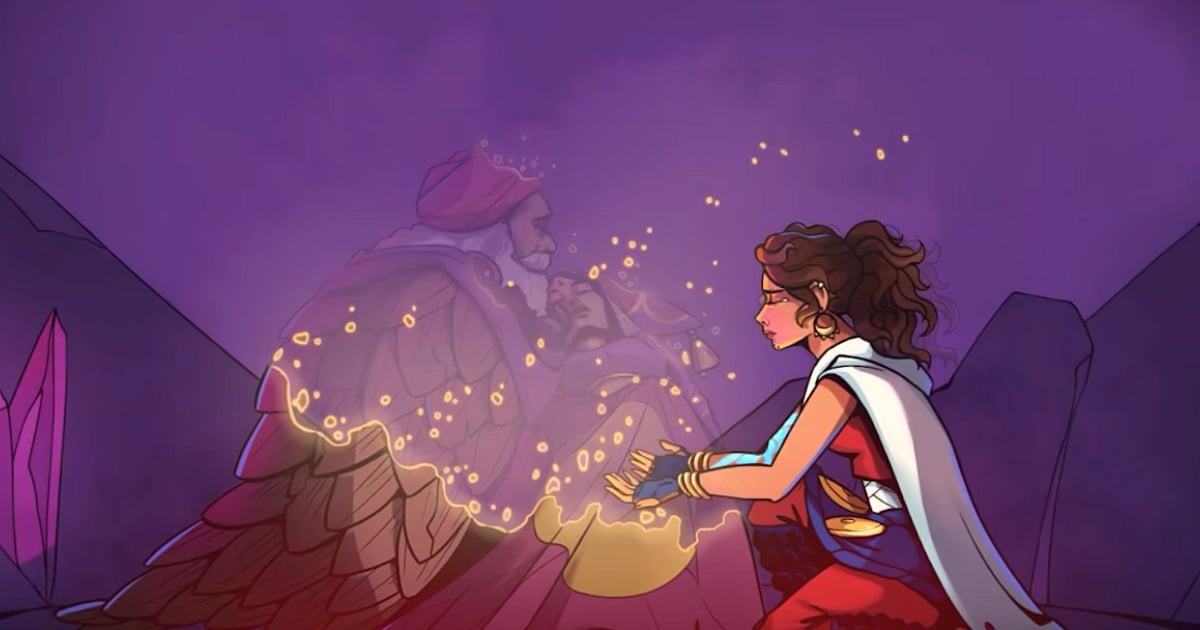
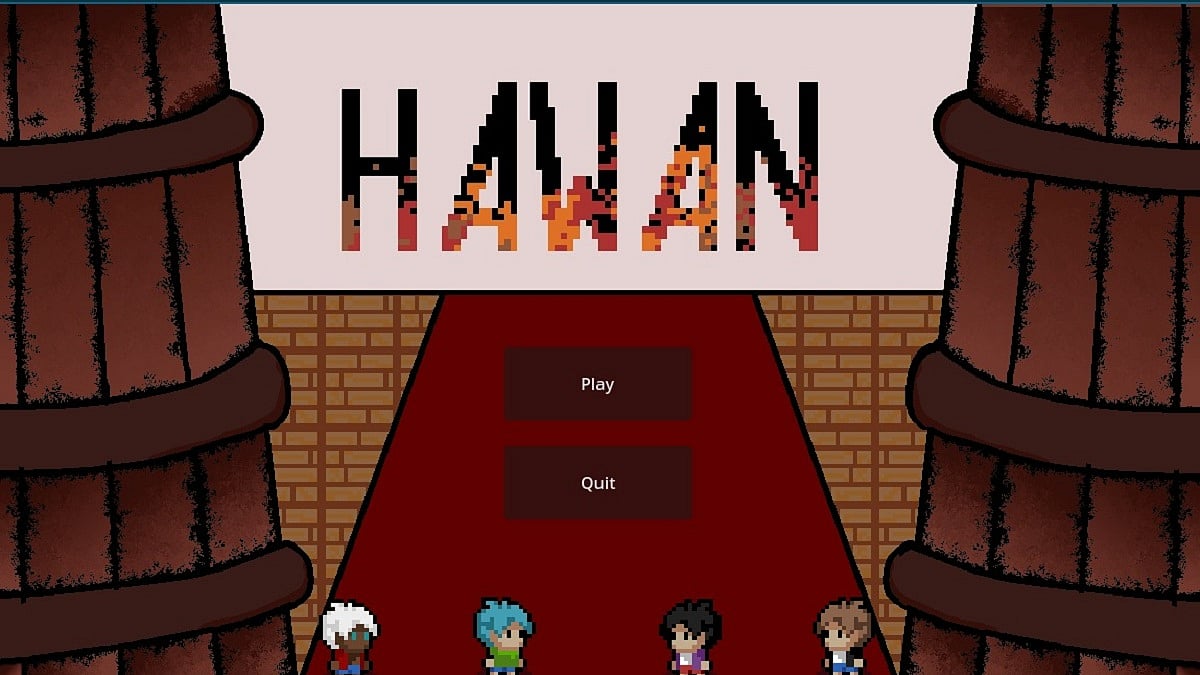
The team’s game, Hawan, emerged from a symbolic interpretation of the theme “Caravans & Crossroads.” Rather than focusing on literal imagery, the group chose to represent transition, responsibility, and journey.
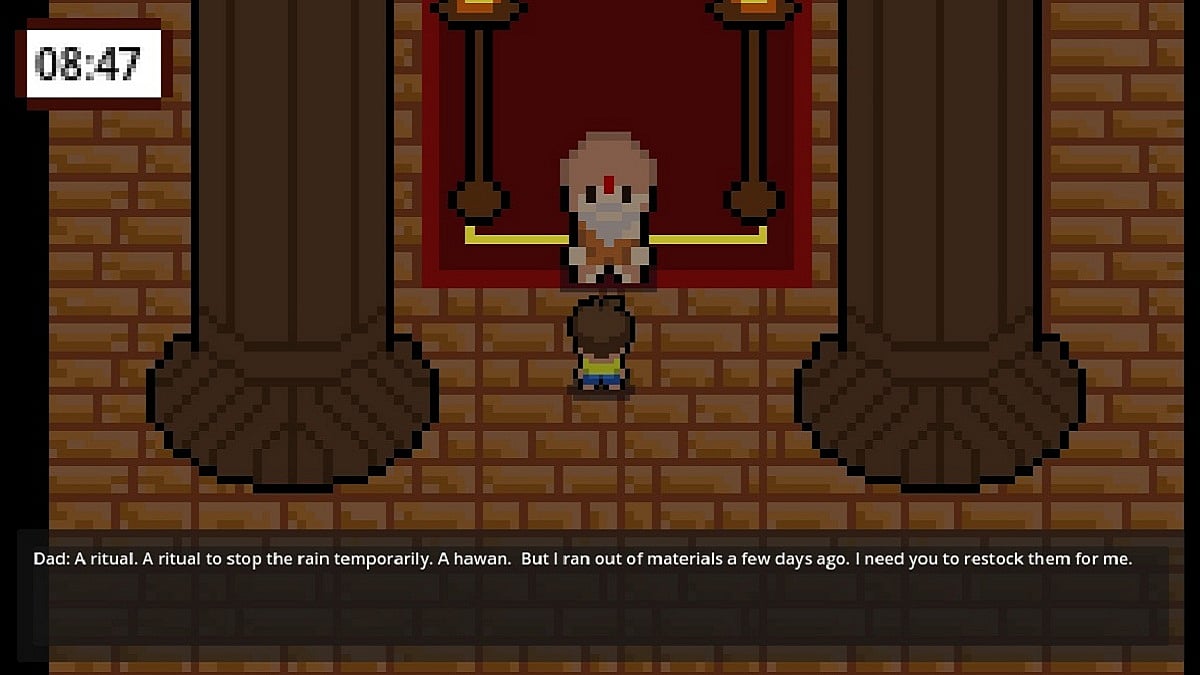
As Tiwari described, “Instead of taking it literally, we took the symbolic meaning and came up with the idea on the spot.” That discussion led to a top-down retro RPG centered on saving a town from an impending flood through ritual and exploration.
The narrative structure helped ground the project emotionally while keeping the scope realistic. According to Tiwari, the goal was to create something meaningful without overwhelming the team during the limited development window.
Inspirations and Design Direction
Different influences shaped Hawan’s identity across art, mechanics, and progression.
Visually, Popli drew inspiration from established RPG aesthetics. “For the game art, the Pokémon games were a great inspiration,” he said, helping define the game’s bright yet nostalgic tone.
Tiwari reinforced that approach, noting that “our game's art style and graphics are mostly inspired by the retro RPG games,” ensuring stylistic consistency throughout the experience.
On the mechanical side, Jain experimented with movement systems inspired by unconventional sources. “The character movement was inspired by the mouse position-based controls of the popular browser game Agar.io,” he explained, adapting the concept to keyboard controls. Mini-games were also included as simplified recreations of classic development exercises.
Tanmay contributed ideas inspired by indie horror pacing. “There were games like Kamla and Granny in the back of my mind for the item-fetching mechanics,” he shared, influencing how tension and exploration were balanced.
Designing Under Time Constraints
As with most game jams, ambition had to be carefully managed. Initially, the team planned additional systems, including a trading mechanic. “At first, we intended to include a trading system and a few mini games,” Tanmay revealed. While some features were completed, the trading system was ultimately removed to maintain stability.
Team Daligo
Technical limitations also surfaced. Atulya explained that persistent player positioning across scenes could not be fixed within the deadline, despite identifying the solution later. Rather than risk instability, the team chose to prioritize completion.
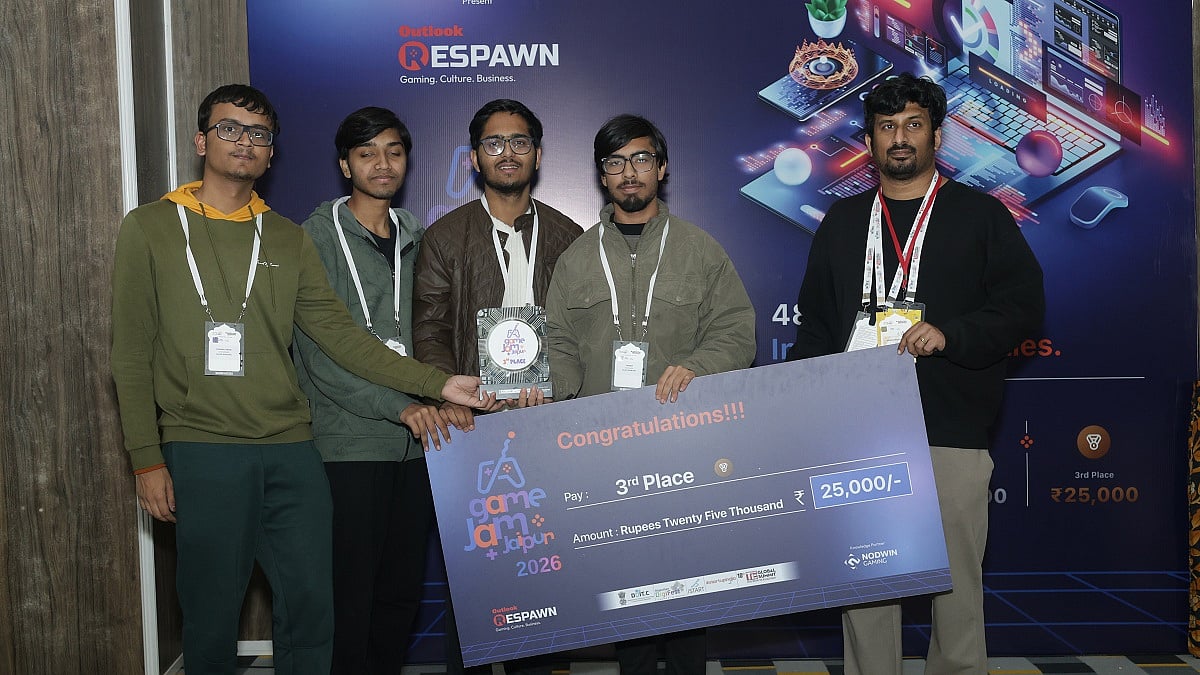
That decision proved crucial. By focusing on a polished core experience, Team Daligo secured third place at Game Jam Jaipur 2026, earning ₹25K.
For Tanmay, the time pressure itself became an advantage. “If we had sat down to make a game without the time constraint, we might have stalled and never finished,” he said, noting how the deadline kept expectations grounded.
Popli echoed this from a workflow perspective. “We distributed the work so the work cycle was quite smooth,” he explained, with art and music handled separately from coding and mechanics.
Hawan was developed using the Godot Engine, a choice driven by accessibility and flexibility. Tanmay pointed out that he had been using the engine since the start of his development journey, and its lightweight nature made it suitable for limited hardware. Jain also valued the fact that Godot is an open-source game engine, which aligned with their learning-focused approach.
The Role of Mentorship at Game Jam Jaipur 2026
Mentorship proved to be one of the most influential aspects of the event. When the team initially struggled with theme interpretation, mentors helped guide their thinking process. “Mentors guided us at various steps,” Popli explained, particularly when the team needed clarity early on.
Tiwari described the impact more directly. “The mentors were a godsend in the competition for us,” he said, emphasizing how constructive criticism helped shape both planning and execution.
Beyond technical advice, mentors helped the team understand how to evaluate ideas realistically and make confident design cuts.
Looking Beyond the Jam
For Team Daligo, the value of Game Jam Jaipur extended far beyond the prototype itself. “The Jaipur Game Jam has been such a motivation booster for the whole team,” Tanmay reflected, especially as it was his first experience leading a group. He credited both mentors and organizers for accelerating their learning curve.
Other team members shared similar sentiments, viewing the jam as a crash course in collaboration, trust, and accountability. In the end, Hawan represents more than a third-place finish. It reflects a team learning how to work under pressure, align creative visions, and ship a complete experience. For Team Daligo, Game Jam Jaipur 2026 was not just about building a game; it was about understanding what it truly means to be a developer.
Author
Abhimannu Das is a web journalist at Outlook India with a focus on Indian pop culture, gaming, and esports. He has over 10 years of journalistic experience and over 3,500 articles that include industry deep dives, interviews, and SEO content. He has worked on a myriad of games and their ecosystems, including Valorant, Overwatch, and Apex Legends.
Abhimannu Das is a web journalist at Outlook India with a focus on Indian pop culture, gaming, and esports. He has over 10 years of journalistic experience and over 3,500 articles that include industry deep dives, interviews, and SEO content. He has worked on a myriad of games and their ecosystems, including Valorant, Overwatch, and Apex Legends.