




Ubisoft India
Is Game Development the Most Volatile Career in Tech?
One in three US game developers was laid off in two years. Here is a full data-backed analysis of job security in gaming versus broader tech, with a specific focus on the Indian market.

Highlights
- One in three US game developers reported being laid off in the two years between 2023 and 2025.
- An estimated 45K gaming jobs were lost between 2022 and 2025 in the US gaming industry, which supports around 350K jobs.
- Indian game developers face the same volatility as local outsourcing studios that are directly exposed to international budget decisions.
In January 2026, the Game Developers Conference published its annual State of the Game Industry report, and it revealed some hard truths. According to responses from over 2,300 industry professionals, 33% of US game developers reported being laid off in the two years between 2023 and 2025.
In most professional sectors, a two-year layoff rate of 33% would be severe enough to trigger government intervention and industry-wide restructuring conversations. Gaming has been going through record-breaking cuts, restructuring announcements, and studio closures. If you are considering a career in game development, it is important to take a closer look at the job volatility in the industry. Is gaming truly a riskier career path than other tech sectors?
Gaming’s Constant Layoff Problem
To understand where the industry stands in 2026, we need to understand the trajectory of the past four years. An estimated 45K gaming jobs were lost from 2022 to mid-2025, making it one of the most sustained periods of workforce contraction the industry has ever recorded.
The progression year over year tells the story clearly. According to the Game Industry Layoffs tracker, gaming companies laid off approximately 8,500 people in 2022, 10,500 in 2023, and 14,600 in 2024. By 2025, the pace had slowed to an estimated 5,300 layoffs.
As of June 2026, 3,300 gaming industry layoffs have happened with 13 studio shutdowns. These layoffs are happening at some of the biggest companies in the world, like Microsoft, Sony, and Unity.
Around 48% of game workers who reported being laid off said they had not been able to secure another job. Of those laid off one to two years ago, 36% still had not found other games industry employment. Many of them left the industry entirely instead of staying in the sector.
Comparing Gaming Layoffs to Tech
The obvious response to gaming's layoff numbers is to point out that broader tech has also had a brutal few years. In 2025, 271 tech companies laid off more than 124,201 employees, compared to 152,922 in 2024 and 264,320 in 2023. Those are large numbers, but the tech sector as a whole employs tens of millions of people globally. The layoff rate as a proportion of total employment is considerably lower than gaming's equivalent figure.
The US games industry alone supports 350K jobs, and the industry saw a 2% industry-wide headcount cut in 2024. It was the first major contraction since 2010. Against that 350K base, losing roughly 14,600 jobs in 2024 represents approximately 4% of the total US games industry workforce in a single year. For context, the US information sector's unemployment rate rose to 3.9% in Q4 2024, up from 3.1% in Q4 2023. Gaming's localized employment loss rate in its peak year ran well above that.
Ubisoft
There is also a structural difference in what happens after a layoff. A software engineer laid off from a gaming company can, in most cases, find work at a fintech firm, an enterprise software company, or an e-commerce platform. There are many adjacent tech sectors where they can seek employment.
A developer or a narrative designer has a narrower path. Their skills are more specialized, and their external market is smaller. Among laid-off tech workers, software engineers found new jobs at a slower pace than most other roles, with only 27% starting new jobs within a few months of being laid off. Game-specific roles face an even smaller pool of potential employers.
Why Gaming is Structurally More Volatile
The first and most significant cause of the volatility is the project-based nature of game development at scale. A game takes three to seven years to make at the AAA level. The number of people a new game needs can also fluctuate.
Unlike software companies that are equipped to support continuously evolving products, game studios have historically had an awkward relationship with the gap between projects. The industry has partly addressed this through live service models that extend games' post-launch lives indefinitely, but those models have their own failure modes.
According to GDC's survey, developers themselves place most blame for layoffs on Covid-era overexpansion, rising production costs, and unrealistic expectations for the "next big hit.” Poor leadership and management are also major factors.

Pexels
Between 2020 and 2022, gaming companies hired aggressively to meet pandemic-driven demand, which was real but also obviously temporary. The correction that followed was steep because the expansion had been steep. The gaming industry had not built in mechanisms to absorb the downswing gradually.
The second structural cause is the hit-driven economics of the business. A game either connects with its audience at scale or it does not. The consequences of not connecting are immediate and severe. Unlike a software product that can iterate toward product-market fit over time, a game that launches to poor reception is typically not recoverable. This binary outcome structure makes gaming fundamentally riskier as an employment environment than most other technology sectors, where product failure is painful but not necessarily company-ending.
Quality assurance developers have been hit the hardest by layoffs, with 22% reporting being laid off in a single year compared to 7% of all developers. Business and finance professionals reported the fewest layoffs at 2%. The disparity by role is significant. QA teams, which expand massively during late-stage development and crunch, are often the first to be cut after a game ships. Narrative designers and artists working on content that ships with the game face similar exposure. Technical roles with more transferable skills sit in a relatively better position within an otherwise volatile environment.
The Indian Market has the Same Underlying Risk
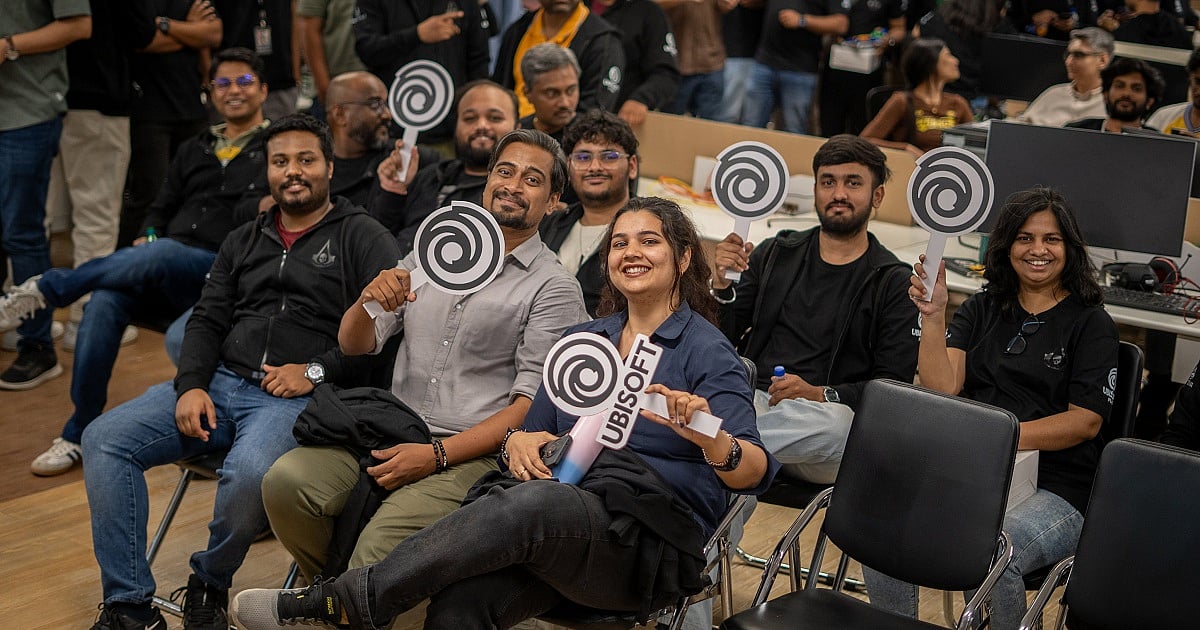
India's game development ecosystem is structured differently from the US or European markets in ways that both buffer and amplify the global volatility. The buffer comes from the outsourcing model. India has over 555M gamers and a video games market that crossed $1.5 billion in 2025, according to Lumikai's State of India Interactive Media Report 2025. Global publishers, outsourcing firms, and product studios continue to expand hiring across engineering, art, quality assurance, and design roles. The large international studios with offices in India, EA Hyderabad, Ubisoft Pune, and Rockstar India, employ Indian developers primarily on outsourcing and co-development work for global projects.
When global projects are active and funded, that work is relatively stable. Indian studios are not making the hit-or-miss bets that AAA original IP requires. They are providing services to studios at affordable rates.
When the global studios that outsource work to India cut their budgets, the outsourcing contracts are often among the first things to go. A developer at an Indian outsourcing studio can lose their job because a publisher in California decided to cut a project that was generating outsourcing revenue for their employer.
Pexels
India's domestic salary structure is partly anchored to outsourcing client rates rather than product-led market valuations. The volume of candidates creates the appearance of oversupply, and studios use that to keep starting salaries low. Indian developers are paid less because they work in a market that is structured around service delivery rather than product creation. That same structure limits their ability to build the kind of ownership over their work that provides some insulation against cuts.
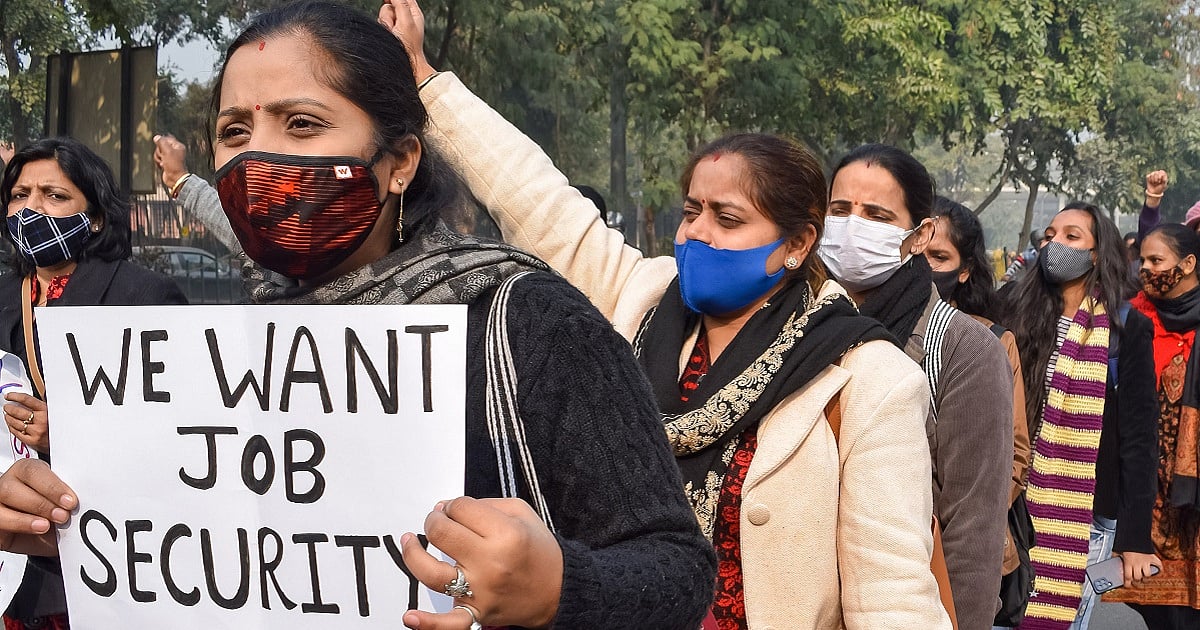
There is also a union gap. The global conversation about game developer unionization has been growing, with notable union formation at companies including ZeniMax Workers United and other Microsoft Game Studios teams. India has essentially no equivalent conversation happening at scale. The labor protections that exist in Indian law, including notice periods and severance requirements, apply to gaming studios as they do to other employers. However, the informal nature of many contracts, the prevalence of contract and project-based work, and the general absence of collective bargaining are major problems. These issues leave Indian gaming industry professionals far less protected.
With India's AVGC market projected to hit $6.8B by 2026 and the country holding the title of the world's largest mobile gaming market by app downloads, the industry will need roughly 2M skilled professionals by 2030.
The Uncertainty Surrounding AI
No analysis of gaming job security in 2026 is complete without addressing artificial intelligence, because it has made the industry unpredictable. Among GDC survey respondents, 13% of developers said AI was having a positive impact on the industry, down from 21% in 2024, while 30% said it had had a negative impact.
The roles most exposed to AI displacement in gaming are broadly the same ones that were already most exposed to layoff cycles. Roles like QA testers, concept artists, texture artists, writers, and localization specialists are the most vulnerable. These are also, in the Indian context, some of the most common entry points into the industry for new graduates. These roles could be compressed by automation before the demand for higher-complexity technical roles expands to compensate. The talent pipeline that India has been building through its AVGC programs could produce graduates for a market that no longer needs them at the projected volume.
What Should Gaming Industry Aspirants Do?
Careers in the gaming industry require planning at a level other careers do not. Specialization in transferable technical skills matters more in gaming than in most other tech sectors precisely because the exit options need to remain open. An Unreal Engine programmer is a game developer, but they are also a real-time 3D developer who can work in architecture visualization, film production, and automotive design. A pure generalist or a purely game-specific specialist has a narrower landing pad when the cuts come.
Building a financial runway is not optional either. The gaming industry's cycle of project-based employment means that gaps between jobs are structural by nature. A developer who treats their career as a series of projects rather than a permanent employment relationship will have an easier time navigating the industry. Someone who builds their finances while being aware of the risks involved is better positioned to absorb the industry's volatility without it becoming a major personal crisis.
In India specifically, the studios most likely to offer meaningful long-term security are the ones building original IP. The outsourcing model provides employment, but it concentrates risk in decisions made elsewhere. Indian studios like Nodding Heads Games and Tentworks Interactive are taking the harder path and building something of their own. Some of them will not make it, but the developers who gain experience in original IP development are building skills and portfolios that the outsourcing market cannot replicate.
The GDC's 2026 data is the clearest picture yet of what the gaming industry actually is as an employment environment. 17% of surveyed games industry workers reported having been laid off in just the last 12 months, while half of the respondents said their current or most recent employer had conducted layoffs in the last year. Those numbers describe a sector in which the question is not whether you will be affected by a layoff at some point in your career, but whether you will be prepared when it happens.
That preparation looks the same whether you are in Bengaluru or Seattle. Transferable skills, financial resilience, a portfolio that speaks for itself, and a clear-eyed understanding of the economics of the specific studio you are working for. The industry can be rewarding to people who love making games enough to understand the business of making games.

Author
Abhimannu Das is a web journalist at Outlook India with a focus on Indian pop culture, gaming, and esports. He has over 10 years of journalistic experience and over 3,500 articles that include industry deep dives, interviews, and SEO content. He has worked on a myriad of games and their ecosystems, including Valorant, Overwatch, and Apex Legends.
Abhimannu Das is a web journalist at Outlook India with a focus on Indian pop culture, gaming, and esports. He has over 10 years of journalistic experience and over 3,500 articles that include industry deep dives, interviews, and SEO content. He has worked on a myriad of games and their ecosystems, including Valorant, Overwatch, and Apex Legends.



Related Articles