





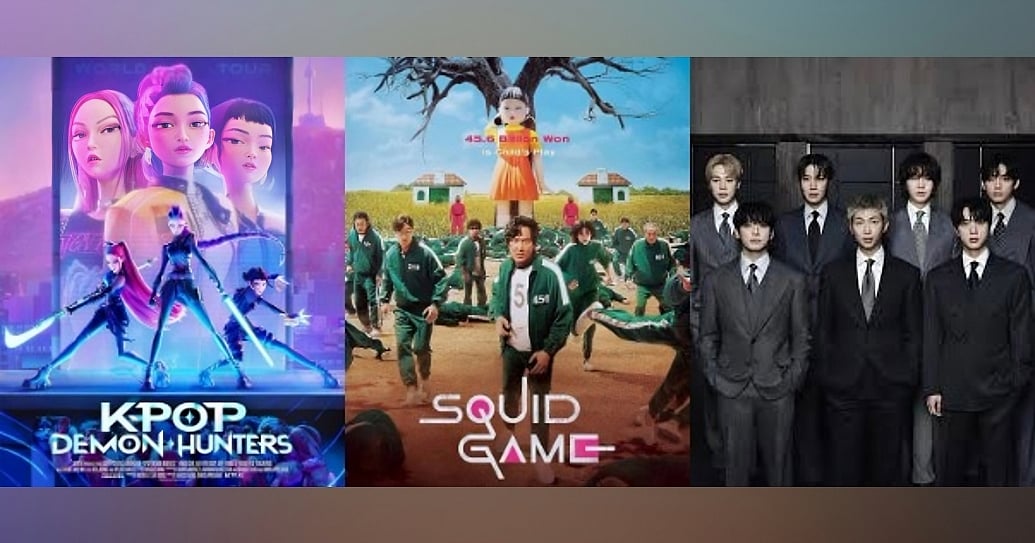
Popular South Korean content reshaping global streaming trends.
BTS, KPop Demon Hunters & Squid Game Reshapes Hollywood?
A Nielsen report highlights that the battle for viewer attention is increasingly being shaped by K-content which only a few expected to dominate this far.

Highlights
- South Korean content, once a niche entertainment export, has now become one of streaming sector's strongest tools for attracting and retaining mass audiences.
- Viewer data aggregated by Nielsen suggests K-content is surpassing some of television’s most established franchises, making the newer titles more popular than ever.
- The influence of Korean pop culture is now growing beyond fandoms into Hollywood’s broader creative and business decisions.
According to the GOLD HOUSE x Nielsen 2026 AANHPI Diverse Intelligence Series report, South Korea’s cultural exports have evolved from a commercially viable subcultural entertainment into a major engine for Hollywood’s mass-market engagement. This multi-demographic dominance of K-content is forcing a structural realignment of global streaming plans as key platforms shift their strategies to secure long-term viewer retention.
These fundamental technicalities are rooted deeply in loyal viewing habits. Driven by a core consumer base, the Nielsen Advanced Audience Attitudes Study notes that 58% of Asian American, Native Hawaiian, Pacific Islander (AANHPI) viewers mindfully support identity-reflecting creators, which translates to a significant marketing advantage. Notably, 57% of these consumers watch closely for more culturally resonant advertising, thereby generating a unique 11-point engagement premium over the 46% baseline of all Americans.
K-Content Overtakes Legacy TV Shows, Becomes a Global Streaming Power
Such consumer behavior is somewhat aggressively dismantling the conventional TV playbooks as AANHPI viewers become more interested in high-concept international content like Netflix’s Squid Game or its animated feature KPop Demon Hunters, instead of legacy hits like NCIS or Law & Order: SVU. Notably, Netflix’s Squid Game logged a viewership of 1.57 billion minutes, while KPop Demon Hunters recorded a watchtime of 1.33B minutes in the same reagion. This K-centric star power blends seamlessly into premium Western IPs, as showcased by the Thailand-set third season of HBO Max’s The White Lotus, which featured BLACKPINK’s Lisa, that garnered about 1.025B minutes of viewership.
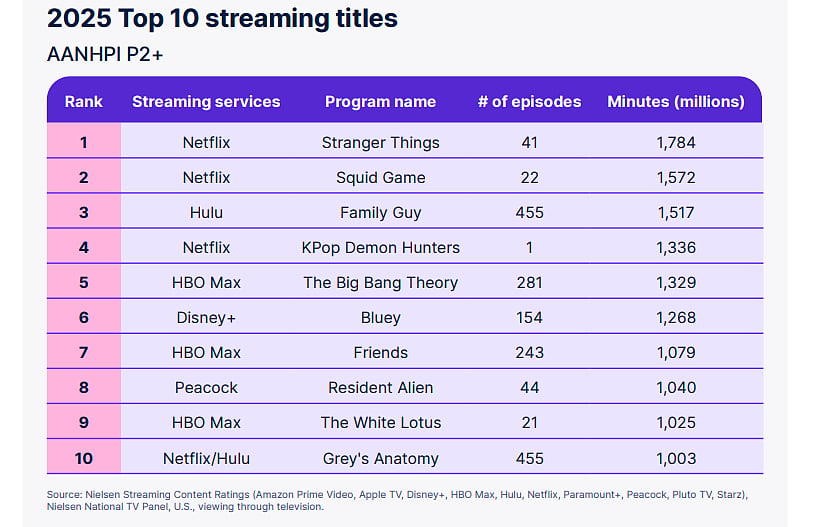
Image Credit: Nielsen
By becoming 2025’s most-streamed original movie worldwide with 20.5B minutes, KPop Demon Hunters depicts this cross-demographic dominance of K-content in the best possible manner. According to the Nielsen report, the film interestingly charted success for 26 consecutive weeks while hitting number one ten times, shattering ethnic and age silos. The report highlights that the audience demography of the film, which was initially meant for young audiences aged 2–11 (48%), expanded through the older age bracket as well. This led to the film ranking first among Hispanic, Black, White, and AANHPI viewers alike before winning top awards like the Grammys and Oscars. The IP remains highly static, adding an extra 3.1B minutes through mid-March 2026.
BTS Proves K-pop's Cross-Generational Reach
Meanwhile, BTS’ homecoming proved that its hiatus did not cause any harm, rather upped their demand; simultaneously it also showed how multigenerational fandoms including that of BTS’, are turning K-pop into a robustly mainstream element. After Netflix broadcasted BTS’ Gwanghwamun concert live (over 18M viewers), the band released their documentary BTS: The Return, which pulled a viewership record of 47M minutes in seven days, according to Nielsen. Defying standard industry norms, Nielsen metrics further confirmed that 73% of the audience for the BTS documentary were non-Asian, with Gen X and Millennials together accounting for 60% of the viewership, while Gen Z held a modest 26% of the viewership share.
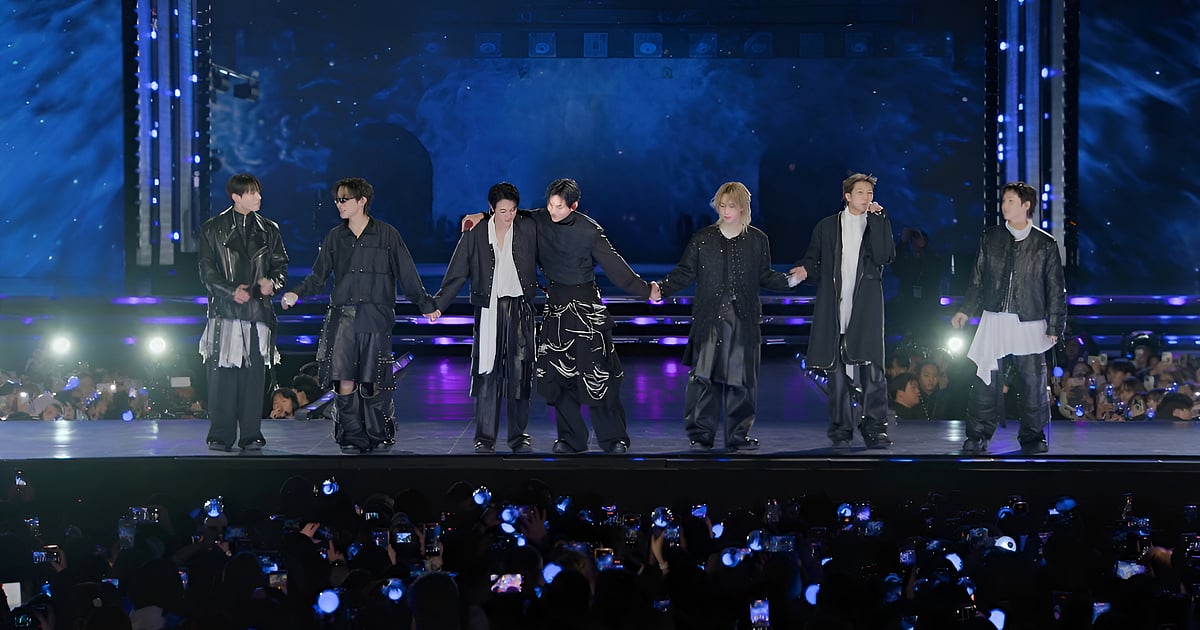
BTS performs at Gwanghwamun Square, drawing thousands of global fans (Image Credit: Netflix)
Hollywood Reorients Around K-Culture?
This macroeconomic shift has been restructuring Hollywood’s creative pipeline in recent years. For instance, Beef creator Lee Sung Jin is now contributing in the writing of Marvel's X-Men reboot, while artist Laufey is anchoring mainstream moments with her song Madwoman which has an all-star cast including Olympic gold medalist Alysa Liu and KATSEYE’s Megan Skiendiel in the music video, who have an East Asian origin. Amidst this reorientation around K-culture, the signal for studios and brands is pretty clear that K-content is no longer a diversity initiative, but one of the primary centers of commercial gravity in the global entertainment industry.

Author
Diya Mukherjee is a Content Writer at Outlook Respawn with a postgraduate background in media. She has a passion for writing content and is enthusiastic about exploring cultures, literature, global affairs, and pop culture.


Related Articles