South Korea is rapidly growing its creative economy amidst better public cultural participation.
Inside South Korea's Exploding Art Boom
As public integration of art and culture expands, South Korea is redefining how art is created, experienced, and monetized.

Highlights
- South Korea's expanded Culture Day policy makes museum visits a common habit with participation up by 71.1%
- Street art, collectibles, and IP-based merchandise are coming up as the next engines of Korea's creative economy
- Fairs like Urban Break and Toy Con Seoul unite 355 artists from 15 countries as Korean art becomes globally commercialized
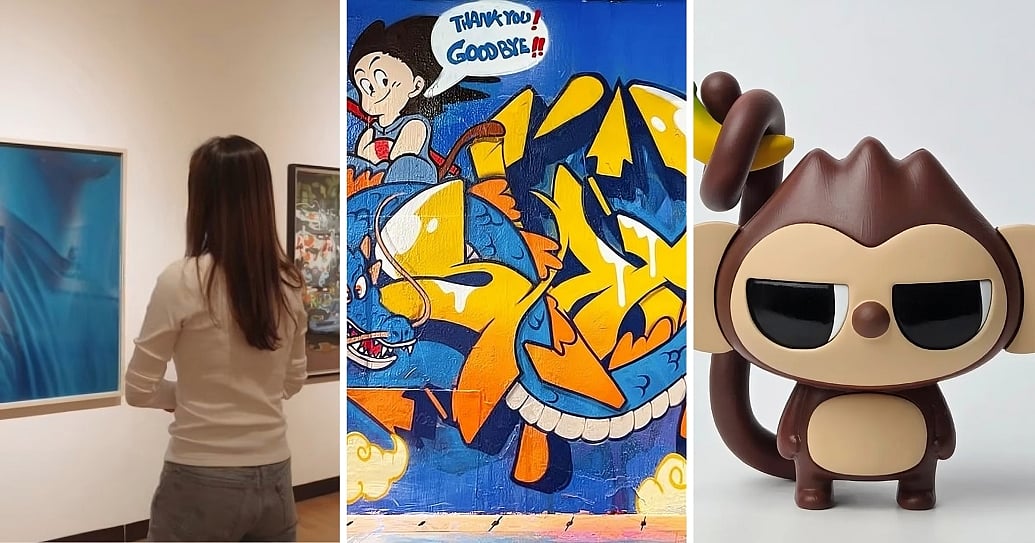
A huge expansion of South Korea's state-sponsored cultural initiatives has unleashed a wave of consumer demand, laying the groundwork for a highly commercialized "goods craze." Notably, this trend is uplifting street art like graffiti, as well as limited-edition toys, into mainstream economic drivers.
Government policy widens cultural participation
This structural transformation comes amidst the government's landmark Culture Day policy. By providing weekly discounts, free admissions and elongated museum hours, the Ministry of Culture, Sports and Tourism set off a 71.1% increase in cultural participation, according to its survey, dismantling long-standing cost, time, and physical barriers.
The ministry surveyed 1,000 active participants across June 24 and July 1 and, released the report on July 15, 2026. The survey outcome showed that the ministerial program has made art access a self-sustaining societal habit. About 90% of respondents were reported to be highly satisfied, while 91% said they would recommend the program.
"This data unequivocally validates the profound structural impact of our expanded cultural policies," said Kim Yong-seop, the ministry’s director general for regional culture policy, as noted by The Korea Times. Kim promises to refine the framework so that a rich cultural life becomes an everyday reality rather than a luxury.
Non-traditional art, IP, and collectibles redefine Korea's creative economy
Such daily civic art integration comes into being as many cultural and business entities pave the way for "identity consumption" on the retail floor, where young consumers express their values through art-derived "goods" based on intellectual property (IP). The trend ranges from the National Museum of Korea's "MU:DS" to the Buddhist-themed "BUD:DS" goods introduced by the Jogye Order.
This commercial momentum is seen best at COEX in Seoul, which will run from July 30 to August 2, 2026, alongside the 7th edition of Urban Break, which debuted in 2020 to showcase street art separately from traditional fine art. This year, the fair has merged with Toy Con Seoul to create an artist-centered event where 355 creators from 15 countries will curate their booths. The event will reportedly have a single integrated admission ticket.
The flagship program will have Devsisters' flagship gaming IP, Cookie Run, in a special "Brave Journey" exhibition, where 30 artists from 10 countries will reinterpret the characters. The guest country of honor, Japan, is scheduled to send 40 artists to present works from neo-pop and graffiti to Buddhist paintings alongside traditional textiles.
Supported through a Korea Arts Management Service program, these events and fairs are set to expand emerging artists' work into art toys and objects while also helping them scale internationally, highlighting a changing creative economy. "When an artist's creation expands into IP, brands, and markets, creation also becomes sustainable," said Jang Won-chul, CEO of Urban Complex and the fair's general director, to Seoul Economic Daily.
Author
Diya Mukherjee is a Content Writer at Outlook Respawn with a postgraduate background in media. She has a passion for writing content and is enthusiastic about exploring cultures, literature, global affairs, and pop culture.

Related Articles