





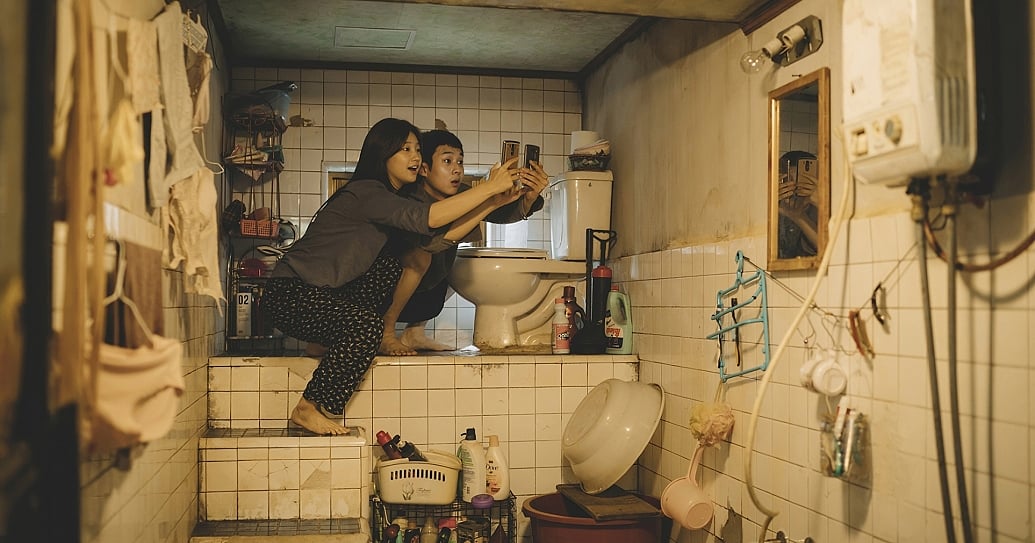
South Korea implements actor fee caps and cost controls to revive its film sector.
Hybrid Efforts and Fee Caps to Reset Korea's Film Industry?
Investment pressure is pushing Korea's film sector to rethink its production economics, corporate roles, and the future of mid-budget cinema.

Highlights
- As Korean film investment dries up, theaters and studios venture out into related areas for better business.
- A voluntary actor fee cap for government-backed mid-budget films marks South Korea's latest move to ease production costs.
- Amidst these reforms, the government looks forward to inviting private investors back into the film industry of the country.
South Korea's film industry is restructuring itself amidst a prolonged mid-budget investment shortfall. As theater operators and production companies blur traditional business lines, the government and many industry stakeholders are introducing cost controls, including actor fee caps.
Theaters and Studios Redraw Film Business Models
As per The Seoul Economic Daily, theater chain CJ CGV launched CGV Pictures near the end of last year to invest in and distribute films, intending to address a domestic shortage of mid-budget content. Its first investment title, Okay Madam 2, will open in August, 2026.
This CGV project comes after the company’s earlier distribution successes with God's Band, which drew 1.45 million viewers. Notably, the figure is more than double its break-even point. A CJ CGV official reportedly told the publication that the move was created to fill the gap left by contracting film investment.

God's Band Movie Poster
Production companies are also following a similar path. Hive Media Corp, the company behind hits like 12.12: The Day and The Man Standing Next, has expanded into distribution and imports. The company is reportedly distributing the 2025 Hollywood release Marty Supreme while self-financing this year's The Assassin(s).
By4M Studio, meanwhile, is growing beyond distribution into artist management. The company acquired AM Entertainment, the agency that represents actors Kim Woo-bin and Shin Min-a, after experiencing success with projects like Firefighters, which overcame a cast controversy to draw in 3.85M viewers.
Industry officials cited by The Seoul Economic Daily indicate the intensifying funding gap for mid-budget films is pushing operators across the industry to get a direct hold on investment and distribution through different means. Nevertheless, the trend gets trickier owing to the current financial restructuring of Central Group affiliates like Megabox and Plus M Entertainment.
Government, Agencies Back Voluntary Actor Fee Caps
Amidst this, the government has responded with a cost-control measure of its own. The Ministry of Culture, Sports and Tourism, along with the Korean Film Council, major talent agencies such as BH Entertainment and Management SOOP, and other producer groups, have reportedly signed an agreement on July 16, 2026.
Under the deal, lead and supporting actor fees will be capped at less than 10% of net production budgets for films earning support via the government's "Mid-Budget Film Production Support" program. The program was launched in 2025 with a ₩10 billion (~ $6.76 million USD) budget and, has since grown to ₩46B (~ $31.09M). As reported, the Ministry emphasized that the agreement is a voluntary "moral consensus" with no legal enforcement.
Reshaping the Economics of Korean Film Industry
Instead of depending upon merely one policy intervention, South Korea's response seems to be unfolding across the entire film value chain. Companies are looking for enhanced control over financing, production, and distribution amidst the weakening of traditional investment.
As private capital retreats, mid-budget films in the ₩2–10B (~ $1.3–6.7M) range faced increasing difficulty securing financing, leading to fewer projects entering production and delays in finalizing investment and distribution deals. Jiwon Jung, Researcher, Korean Film Council (KOFIC), noted in an Asian Contents & Film Market (ACFM) report that Korean commercial films with production budgets above ₩3B (~ $2M) fell to 31 titles in 2025. Also, its average returns declined 33.1%, showcasing the mounting profitability pressure and private financing.
The Korean Film Council reported that the country’s domestic film industry generated ₩419.1B (~ $282M) in box office revenue in 2025. This marked a sharp 39.4% decline from the last year, with admissions for domestic titles dipping by 39.0% to 43.58 million. Additionally, Korean cinema's revenue market share declined by nearly 40%, indicating a significant setback from the strong position it held in recent years.
Dreamstime
Meanwhile, the government is targeting structural production expenditures, including rising talent costs that have long dented profitability. Lead and supporting actor fees accounted for 18–19% of the average ₩9.5B (~ $6.4M) production budget for Korean films in 2024, further emphasizing why cost controls have become an industry priority.
Backed by the Korean Film Council's expanded support programs for mid-budget films in 2026, these initiatives intend to solidify the business foundation of domestic filmmaking while also trying to uplift private investment to return to the sector. By reducing financial risks and enhancing the sector’s commercial viability, policymakers intend to rebuild a better financial framework, a more sustainable investment cycle for Korean cinema.
The financial gap has also narrowed opportunities for upcoming filmmakers, prodding the Korean Film Council to ensure that at least 30% of supported projects come from first-time feature directors. With public funding taking on a greater role to maintain the production process, the industry's latest reforms showcase an attempt to restore stability while also creating a strong ecosystem for future generations of filmmakers.

Author
Diya Mukherjee is a Content Writer at Outlook Respawn with a postgraduate background in media. She has a passion for writing content and is enthusiastic about exploring cultures, literature, global affairs, and pop culture.




Related Articles