





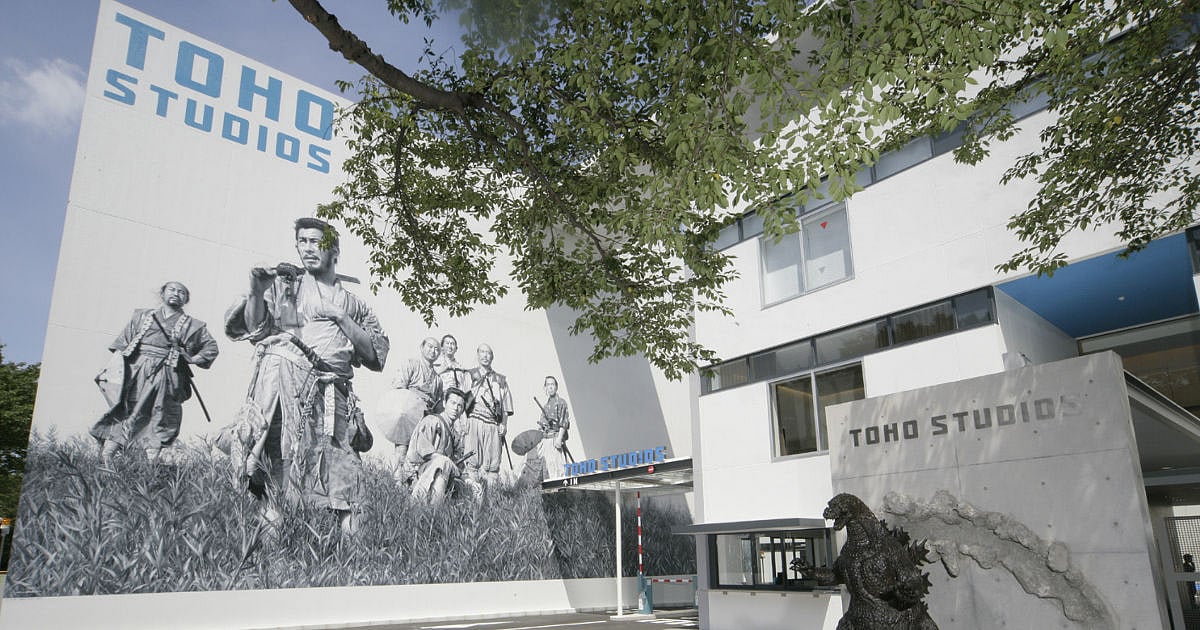
Toho Scales Anime Business With 30 Seasons Per Year by 2032.
Toho Targets 30 Anime Seasons Per Year in Mass Production Push
The Japanese entertainment giant Toho aims for the increased production by 2032.

Highlights
- Toho aims to scale anime production to 30 seasons annually by 2032.
- Growth is driven by rising global demand, streaming revenue, and theatrical successes like Demon Slayer: Infinity Castle.
- Toho's anime business strategy includes studio acquisitions, partnerships, and new IP creation.
Toho Co., Ltd. has outlined plans to expand its anime production to roughly 30 anime seasons per year by 2032, in its fiscal year 2026 financial results presentation from April 14. The expansion is a two-phased strategy. Toho will first target 20 productions per year by 2029, before scaling towards 30 productions.
In the second quarter of FY 2026, Toho recorded a 23% of Operating Profit margin from its IP & Anime business, which the company expects to rise to 26% in FY 2027. Toho currently produces 14 seasons per year and plans to double it by 2032, with an aim to double the operating profit as well. The company recorded ¥22.2 billion (~$139.8M) operating profit in FY2 2025.
TOHO’s Rationale Behind Scaling Anime Business
The strategic rationale behind Toho’s increasing anime output is due to the commercial potential of the segment. In FY 2025, Toho’s anime business accounted for ¥55.4B (~$348.9M) in consolidated operating profit, 17.7% of the group's total.
Toho’s expansion strategy aligns with the continuous growth of Japan’s anime market and export business. Along with streaming, anime theatrical releases are also becoming a major revenue driver. In 2025, movies like Demon Slayer: Infinity Castle and Chainsaw Man – Reze Arc contributed significantly to Toho’s ¥360.6B (~$22.7B) operating revenue. The company has not announced individual contributions.
The corporation's Anime streaming and licensing segment is also growing, with streaming generating ¥23.7B (~$149.24M) in royalty revenue, combining gains from both domestic and international markets. However, Toho’s licensing business in Japan observed a slight drop.
In the presentation, Toho has reaffirmed the IP & Anime business’ position as one of the foundational pillars for the company. The company will oversee this section with a long-term growth strategy, with occasional fluctuation.
How Toho is Building a Production Pipeline to Reach 30 Anime Seasons Per Year
In its growth strategy, Toho emphasized strengthening in-house production functions while expanding partnerships with external studios. Additionally, by 2032, the corporation intends to increase its international net operating revenue ratio from the present 10% to 30%.
In 2026, Toho is planning to continue to strengthen its overseas business, with the plan to distribute Godzilla Minus Zero internationally. Along with the upcoming Godzilla movie, Toho subsidiary GKIDS will also rerelease a few Ghibli titles, including Whisper of the Heart and The Secret World of Arrietty.
To support the scale of its ambitions, Toho has pursued a string of studio investments in recent years. Acquisitions during its 2025 Mid-Term Plan include animation studio Science SARU and U.S. distributor GKIDS, along with partial equity stakes in CoMix Wave Films, Bandai Namco Holdings, and Studio Orange.
Toho also completed its 19.7% acquisition of Studio Orange, the CG studio behind Beastars and Trigun Stampede, in January 2025. Toho's Mid-Term Plan 2028 allots over ¥120B (~755.6B) for expansion expenditures, including mergers and acquisitions, and roughly ¥70B (~$440.7B) over three years for content production.
While Toho's scaling of the anime business aligns with the global anime market momentum, Japan’s anime industry does not offer a frictionless path to scale. In 2025, 60% of animation studios reported a loss, while eight dissolved. Earlier this month, the Umamusume animation studio, Studio KAI, dissolved, raising further concerns about instability.
Toho’s roadmap acknowledged the risks of IP over-reliance, outlining its intent to generate new IPs, along with established franchises. There are also persistent structural issues within the anime production ecosystem. To reach Toho’s stated mass production model, the company would have to balance Japan’s workforce crisis and short gaps in the production pipeline.

Author
Kamalikaa Biswas is a content writer at Outlook Respawn specializing in pop culture. She holds a Master's in English Literature from University of Delhi and leverages her media industry experience to deliver insightful content on the latest youth culture trends.



Related Articles


