




Highlights
- South Korea is betting on traditional craftsmanship as its next global cultural export.
- A sweeping government plan aims to convert the country's fragmented artisan sector into a multi-billion-dollar export industry.
- From tax reforms to tourism and education, Seoul is starting to reshape how Korean crafts are made, sold, and experienced worldwide.
South Korea is preparing its next global cultural breakthrough, which won’t emerge from screens, but from artisans. The Ministry of Culture of South Korea recently announced its Second Basic Plan for the Promotion of the Craft Culture Industry (2026–2030), setting a five-year target. The country aims to grow its craft industry from ₩5.8 trillion (~ $3.7 billion USD) in sales in 2024 to ₩9T (~ $5.8B) by 2030, with an ambition to more than double exports to $4B from $1.9B in 2025.
From Digital Culture to Physical Goods
This ambitious expansion marks a strategic diversification in K-Culture exports, since it mostly relied on K-pop and K-dramas, which have historically secured massive digital audiences. Capitalizing on their global fandom, the policymakers are now looking to use these tactile, high-value physical goods to boost their economy.
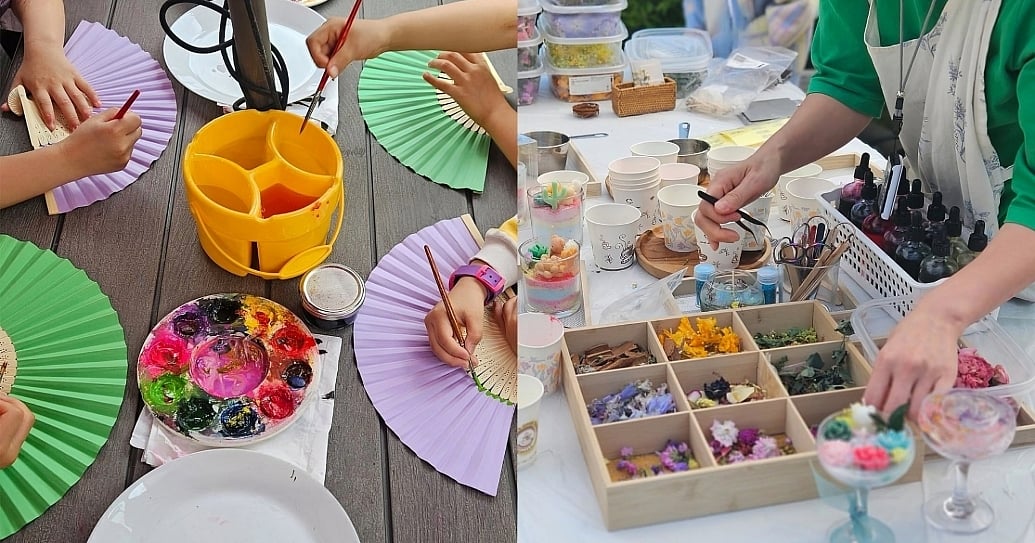
The roadmap seeks to embed Korean traditional crafts directly into the tourism sector by setting up distribution hubs in high-traffic commercial districts. These hybrid spaces will enable global tourists to experience creating Korean handicrafts firsthand prior to purchasing authentic local wares.
To ensure stable domestic demand, the government will be including artisanal crafts in the state-backed Hometown Love Donation System and public institution award goods. Additionally, it will also expand K-Craft exports via strategic outposts like the permanent exhibition hall in Dubai.
Rebuilding a Fragmented Industry
For industry stakeholders, the plan brings long-awaited structural overhauls to rebuild a historically fragmented sector into a formalized economic engine. Significantly, the government will standardize the craft industry as an independent industry group under the Korea Standard Industrial Classification (KSIC).
This bureaucratic shift will, notably, shorten the official national data survey cycle from three years to two years, converting the sector's metrics into officially approved national statistics. Also, Seoul will pursue aggressive regulatory relief. This includes redefining the enforcement decree of the Value-Added Tax Act so that functional craft items receive tax benefits on par with fine art. Interestingly, restrictions under national anti-graft laws to allow higher gift-value limits for local crafts will be eased as well.
K-Craft in Social and Regional Policy
Beyond the corporate paradigm, the state is possibly utilizing the craft revival as a tool for local social bonding and human capital development. The plan will introduce a curated "one person, one craft" education initiative across the entire lifecycle, from infancy to old age, in South Korea.
Notably, the ministry will also launch targeted healing and self-reliance programs based on craft making to support out-of-school youth and reclusive young people. To maintain this creative talent, the government will reportedly repurpose empty provincial properties and idle public spaces into domestic artisan residencies.
The cultural reach will also be decentralized, and the yearly "Craft Week" will be reorganized around some particular regional hub cities, supported by "Visiting Craft Exhibitions" to guarantee that high-quality artisanal works are accessible outside the capital region.
Betting on Human-Made Value
This huge structural and cultural implementation arrives at a major inflection point. As artificial intelligence and digital automation lead global tech landscapes, South Korean officials see an expanding, premium market for human authenticity and manual precision.
By embedding physical heritage with digital pop culture, the state intends to grow the scope of Korean cultural exports entirely. The multi-layered ecosystem will gradually be tethered to a newly proposed National Craft Center Korea to manage regional craft clusters.
"Now, when the world's interest in K-Culture is spreading to crafts that contain Korea's unique aesthetic sensibility, it is an important time for K-Craft to leap forward," said Culture Minister Choi Hwi-young, according to Seoul Economic Daily. He noted that the plan will make the discipline into a high-value-added industry that will dominate the global market.