Game Jam Jaipur
India’s Rising Indie Developers at Game Jam Jaipur 2026
Game Jam Jaipur 2026 highlights how student developers across India are exploring indie game creation through experimentation, mentorship, and hands-on learning.

Highlights
- Game Jam Jaipur 2026 brought together student teams experimenting with game development.
- Participants from colleges across India used the event as a learning ground rather than a competition-first experience.
- The jam reflected the growing foundation of India’s indie game development ecosystem, driven by curiosity and iteration.
Across India, interest in game development is no longer limited to major studios or metro-based tech hubs. Increasingly, it is taking shape in classrooms, college hostels, and weekend events like Game Jam Jaipur 2026, where students experiment with ideas long before they consider careers.
Game Jam Jaipur 2026 brought together participants from different academic backgrounds, many of whom were not chasing recognition or funding, but simply trying to understand how games are made and whether they could build one themselves. Among them were teams like PIXELX from VIT Bhopal and Code Crew, both representing a generation that is learning through experimentation rather than formal industry pipelines.
Game Jam Jaipur 2026 as a Learning Ground
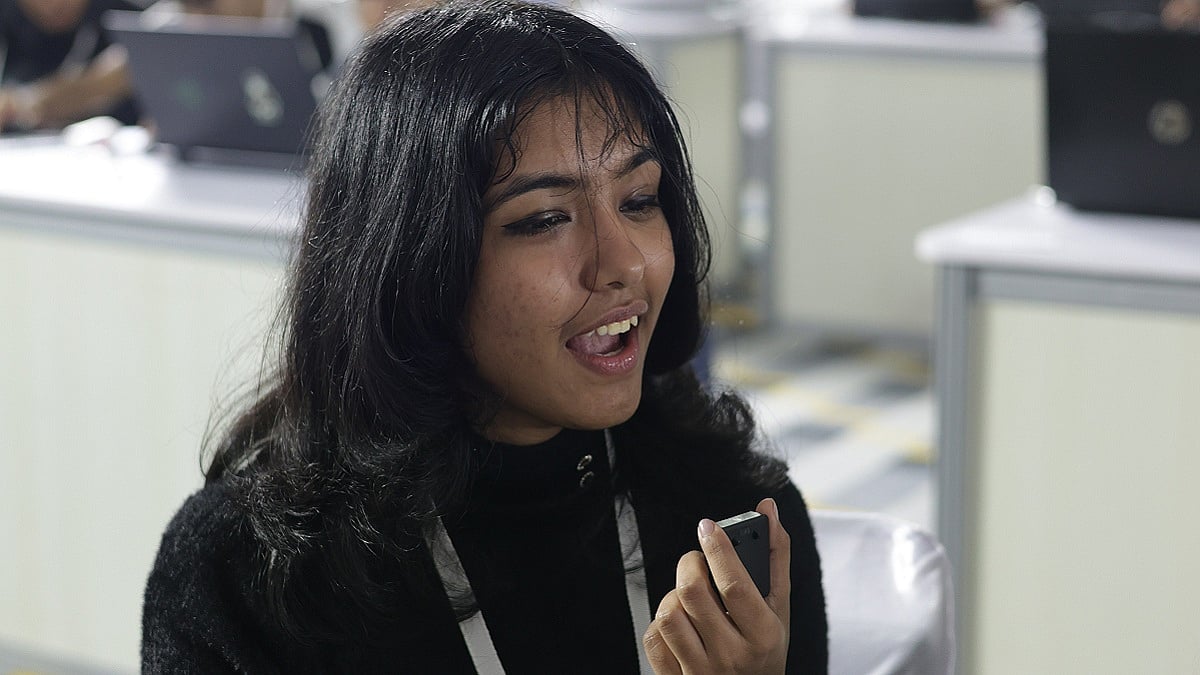
For Team PIXELX, the jam marked an opportunity to step outside structured coursework and into a fast-paced development environment. The team included Ananya Tiwari, Varun Batta, and Shreya Arora, each taking on different responsibilities as they worked on a 2D RPG prototype.
Once introductions were out of the way, the experience quickly became about adaptation. According to Tiwari, “It has been fun. I have enjoyed working on this game.” The competitive environment, she noted, created a sense of urgency that forced constant learning.
Game Jam Jaipur
Batta echoed a similar sentiment, describing the atmosphere as challenging but productive. “It is super nice, and competitive in nature. It is telling us a lot about what we need to learn right now.”
What stood out for the team was the role of mentorship. Instead of struggling in isolation, participants had access to guidance that helped them course-correct early. Arora pointed out that having mentors available removed much of the uncertainty that first-time developers often face. “They are telling us what to do, and now we know exactly what to do,” she said, adding that the clarity helped the team progress steadily.
Learning Through Choice, Not Complexity
PIXELX’s game idea reflected a growing trend among young Indian developers, prioritizing narrative and player choice over technical spectacle. Their RPG centered on a character forced to choose between love and wealth, with each decision shaping a different journey.
The concept was simple, but executing it under time constraints revealed the realities of development. “The most challenging part is starting it,” Tiwari explained, referring to the difficulty of translating ideas into functioning systems.
Batta added that while design can appear approachable, building a playable game quickly exposes its depth. “Game dev is challenging. A lot of people say it’s easy, but it’s not.”
That realization is becoming increasingly common among students experimenting with development. Many arrive with a love for games, only to discover the technical and creative discipline required to build them.
For some members of PIXELX, curiosity about how games function beneath the surface was the original motivation. “My passion is playing games. I want to explore what happens in the server back there,” Batta said, explaining his interest in backend systems. Others shared the desire to create something personal one day— something they could play themselves and show others with pride.
First-Time Developers Finding Their Footing
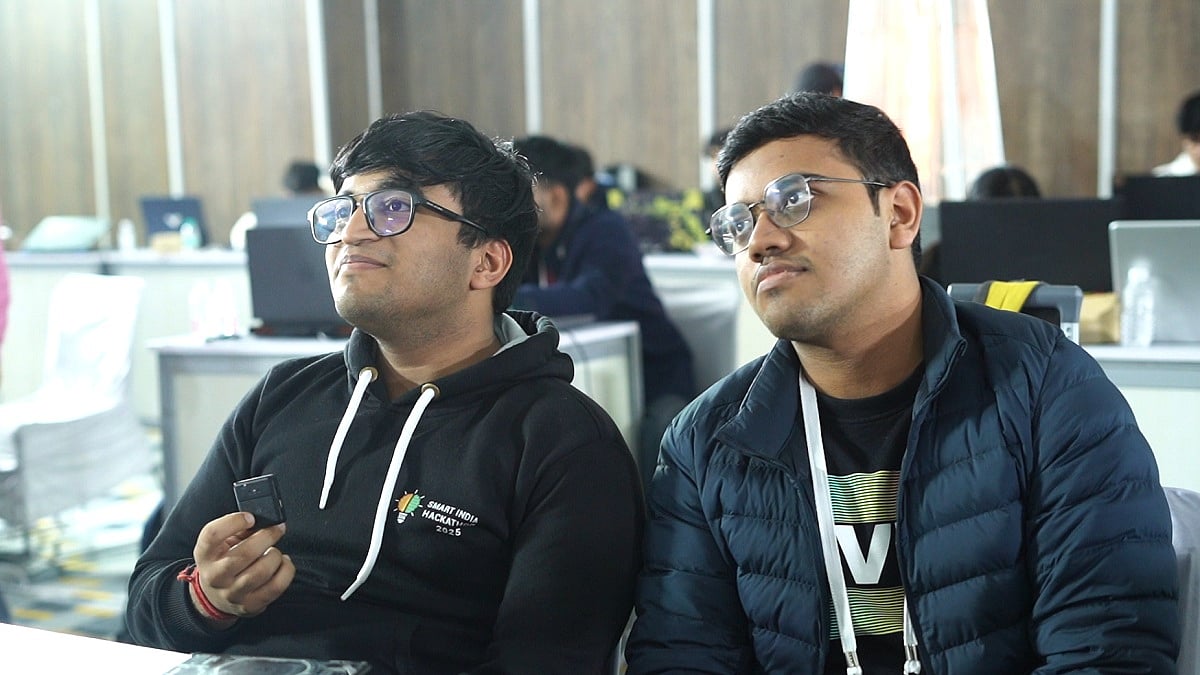
Represented by Sanat Gupta, Neil Chhabra, and Daksh Aggarwal, Team Code Crew was experiencing a game jam for the first time at Game Jam Jaipur 2026.
Game Jam Jaipur
Gupta noted that while hackathons taught problem-solving, game development introduced an entirely different set of challenges.
The shift became apparent almost immediately. The team encountered crashes and unexpected technical issues, common hurdles for first-time developers working with interactive systems. “It’s been kind of thrilling,” Gupta admitted. “We had some crashes, but we were able to make some good progress.”
Rather than discouraging them, those setbacks became lessons in iteration. The team’s project, Miles Between Us, was a single-player 3D experience centered on endurance and decision-making. Players take on the role of a hitchhiker attempting to travel hundreds of kilometres before sunset, managing fatigue and risk along the way.
The idea did not stem from existing titles. According to Gupta, “This is kind of an original idea,” developed through continuous brainstorming rather than imitation.
A Generation Still Exploring
Notably, many participants at the game jam were not positioning themselves as future professional developers just yet. For Code Crew, the event was part of exploration rather than commitment.
“We still haven’t decided to become a game developer,” Gupta said, explaining that the team wanted to experiment with different creative and technical fields before narrowing their focus.
Yet, even within that uncertainty, something resonated. The experience of building rather than playing altered how participants viewed games. Growing up consuming interactive worlds and now attempting to create one offered a perspective shift that traditional coursework rarely provides.
The Bigger Picture for Indie Games in India
What events like Game Jam Jaipur 2026 reveal is not just individual talent, but a changing ecosystem. India’s indie game development scene is still young, but it is being shaped by students who are learning through practice, mentorship, and failure.
These developers are not entering the industry with grand ambitions or polished portfolios. They are arriving with curiosity, persistence, and a willingness to struggle through broken builds and incomplete systems.
That mindset matters. As India’s gaming audience continues to grow, the foundation of its development scene will depend on creators who understand both the joy and difficulty of making games.
Game Jam Jaipur 2026 does not promise careers or instant success. What it offers instead is something more valuable at this stage: exposure, confidence, and the understanding that building games is possible, even if imperfect.
For teams like PIXELX and Code Crew, the weekend was not about finishing flawlessly; it was about the beginning. And in a country where the indie game development scene is still defining itself, beginnings like these may quietly shape its future.

Author
Abhimannu Das is a web journalist at Outlook India with a focus on Indian pop culture, gaming, and esports. He has over 10 years of journalistic experience and over 3,500 articles that include industry deep dives, interviews, and SEO content. He has worked on a myriad of games and their ecosystems, including Valorant, Overwatch, and Apex Legends.
Abhimannu Das is a web journalist at Outlook India with a focus on Indian pop culture, gaming, and esports. He has over 10 years of journalistic experience and over 3,500 articles that include industry deep dives, interviews, and SEO content. He has worked on a myriad of games and their ecosystems, including Valorant, Overwatch, and Apex Legends.