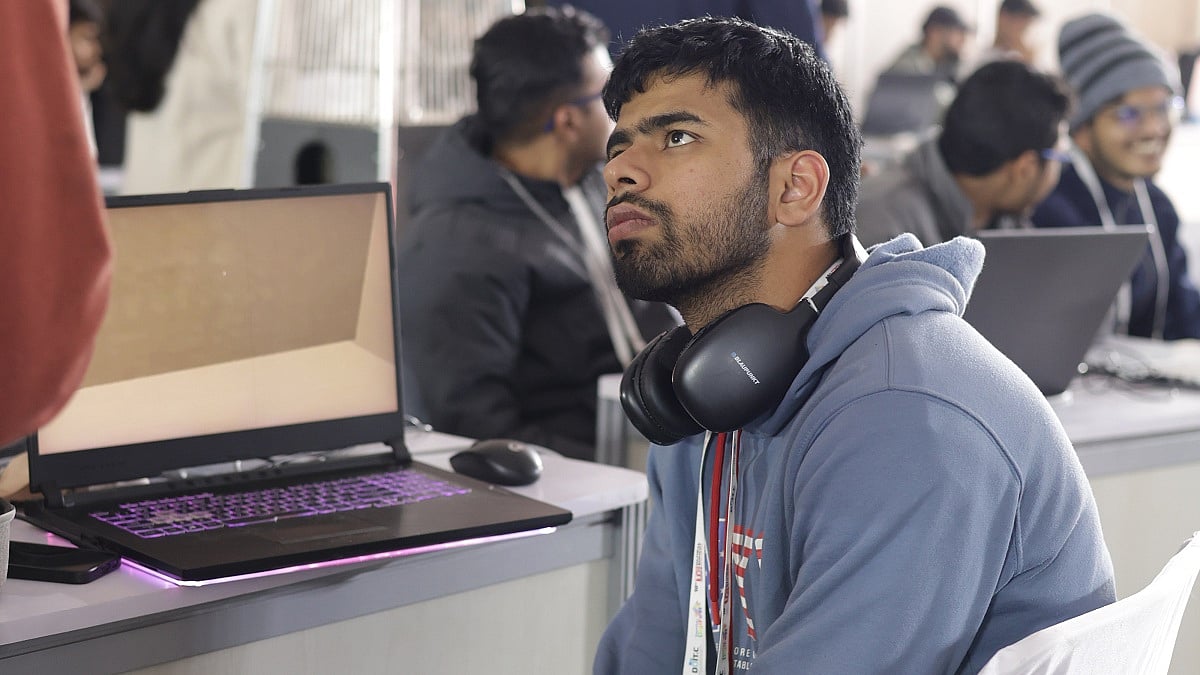
Janesh Kapoor of Team Spambots
Team Spambots at Game Jam Jaipur 2026: A Unique VR Experiment
Janesh Kapoor discusses Team Spambots’ journey at Game Jam Jaipur 2026, experimenting with virtual reality gameplay, working under tight deadlines, and refining ideas through mentorship.

Highlights
- Team Spambots traveled from Delhi to take part in Game Jam Jaipur 2026 at JECC.
- Janesh Kapoor and his team worked on a virtual reality–based simulation concept.
- Continuous mentor feedback at the event helped the team refine their idea and balance technical limitations.
For Team Spambots, Game Jam Jaipur 2026 represented both a technical challenge and a statement of intent. The indie game development team of Janesh Kapoor, Tushar Chandra and Varsha Bhaskar arrived with a clear goal of experimenting and pushing themselves beyond conventional game jam comfort zones.
Introducing himself at the venue, Kapoor said, “We have come here all the way from Delhi to participate in this Game Jam at JECC.” The team’s journey itself reflected the team’s commitment. Rather than treating the jam as a casual competition, Spambots approached it as a testing ground for ideas they had been eager to explore in a high-pressure environment.
Iteration Through Mentorship at Game Jam Jaipur 2026
From the moment development began, the team focused heavily on refinement. Instead of locking into a single direction early, they repeatedly tested their concept and sought feedback from mentors on-site.
Kapoor described the experience as largely positive, noting how the constant iteration helped sharpen their direction. “It's (Game Jam Jaipur 2026) been amazing. We have tinkered with our idea and got it refined from the mentors as well. We are hoping that it gets more refined.”
This cycle of feedback allowed the team to narrow their scope while still retaining ambition. Mentorship played a critical role in helping them understand what could realistically be executed within the limited timeframe, especially given the complexity of the platform they had chosen.
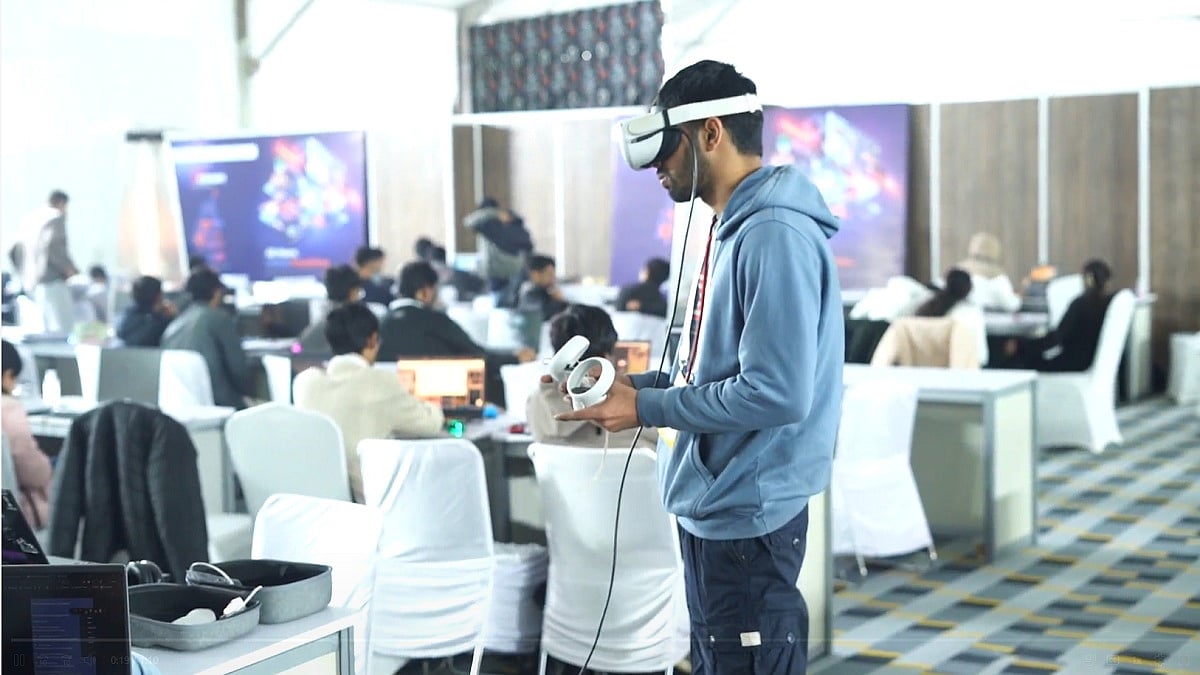
Game Jam Jaipur
Unlike many teams developing traditional PC or mobile titles, Spambots chose to work with virtual reality. The decision immediately raised the technical difficulty, but also aligned with the team’s interest in immersive experiences.
Rather than focusing on spectacle, the team structured their project around a scenario-driven simulation. The idea was to place players inside a high-pressure environment and allow interaction to drive learning and engagement. By approaching VR as a functional experience rather than a visual showcase, the team aimed to keep the project grounded despite the time constraints.
Developing such a system within a 24-hour deadline while competing with 75 other games required strict prioritization. Performance stability, interaction clarity, and basic playability took precedence over advanced features for Spambots, ensuring that the gameplay experience remained functional for their audience even when building a prototype.
The Challenge of Developing in a Game Jam
Delivering a playable game within a single day is demanding under any circumstances. Doing so in virtual reality multiplies the difficulty. However, for Spambots, the pressure was part of the appeal.
The team relied on prior experience of working under tight timelines, trusting internal coordination and role clarity to carry them through the final stretch. Rather than viewing the deadline as restrictive, they treated it as a forcing function that encouraged decisive design choices.
This mindset helped maintain momentum as the final hours approached, keeping the focus on execution rather than perfection. For Kapoor, game development extends beyond mechanics or technology. When reflecting on why he chose this path, his perspective leaned toward philosophy rather than process.
“Game development, I think, is pretty much related to life. Even when a chance is gone, you still have a number of opportunities to rework something. Building that environment— that is game development,” he said.
This belief forms the foundation of why Team Spambots continues to explore the medium. Games, in their view, create safe spaces for experimentation, learning, and repetition, allowing ideas to evolve rather than end at failure.
For them, Game Jam Jaipur 2026 was not solely about the final build. It was about testing conviction, learning through mentorship, and validating their ability to operate under pressure. The experience reinforced the importance of adaptability, trust within the team, and clarity of vision when time is limited.
As the jam concluded, Spambots walked away not just with a prototype, but with greater confidence in their direction as developers. For Janesh Kapoor and his team, the event reaffirmed why they continue to pursue game development in the first place, because every iteration, much like life itself, offers another opportunity to improve.

Author
Abhimannu Das is a web journalist at Outlook India with a focus on Indian pop culture, gaming, and esports. He has over 10 years of journalistic experience and over 3,500 articles that include industry deep dives, interviews, and SEO content. He has worked on a myriad of games and their ecosystems, including Valorant, Overwatch, and Apex Legends.
Abhimannu Das is a web journalist at Outlook India with a focus on Indian pop culture, gaming, and esports. He has over 10 years of journalistic experience and over 3,500 articles that include industry deep dives, interviews, and SEO content. He has worked on a myriad of games and their ecosystems, including Valorant, Overwatch, and Apex Legends.