Heritage in Motion: How BTS reimagined years of Korean history for 190 countries, while also redefining it
BTS Gwanghwamun Show: Inside Modern K-pop & Koreanness in Arirang
The Gwanghwamun show is now over: fans loved it, while critics pointed out flaws. However, the burning question is if critics are misreading the redefined "Koreanness" BTS is portraying.

- BTS reimagines "Koreanness" as flexible and global, combining heritage, language hybridity, and internet culture rather than sticking to just old traditions.
- The Gwanghwamun show marks K-pop's transition to an integrated paradigm in which live concerts, streaming, and merchandise serve as a single income engine.
- Arirang illustrates HYBE's shift from physical sales to experience-based monetization, which has turned the fandom into a high-value, scalable economic environment.
Under the ancient silhouette of Gwanghwamun Square, bathed in red, gold, and blue lights, BTS presented a performance that combined honest human vulnerability with precise execution in global industry planning. The show, which aired globally on Netflix, acted as a watershed moment for the group, proving that the new K-pop playbook is no longer only about music but also creating immersive, multi-platform experiences.
BTS Gwanghwamun Concert Setlist and Notable Moments
The setlist served as a sonic bridge, transitioning from a cherished past to a bold, experimental future. BTS moved from the fluid Body to Body (Arirang) to soulful reinterpretations of the traditional Arirang folk song, before changing gears to the high-energy Hooligan and 2.0 off their most recent album. While global hits like Butter, Mic Drop, Dynamite, and Mikrokosmos anchored the evening, the addition of other Arirang-project songs, including Swim, Like Animals, and Normal (Clean Ver.), marked the group's most powerful and revolutionary shift yet.
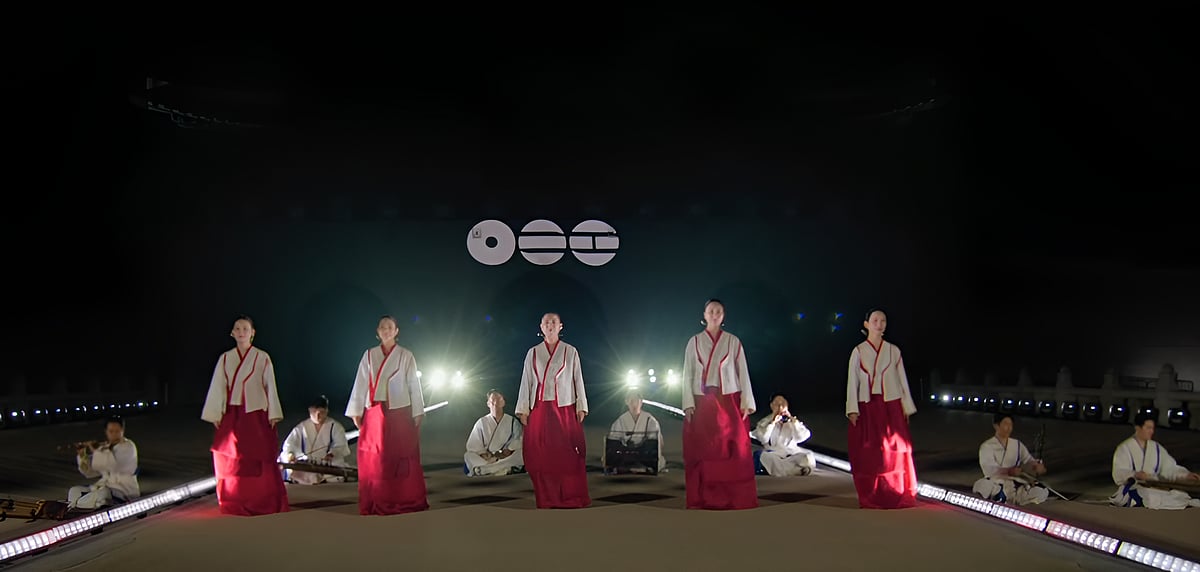
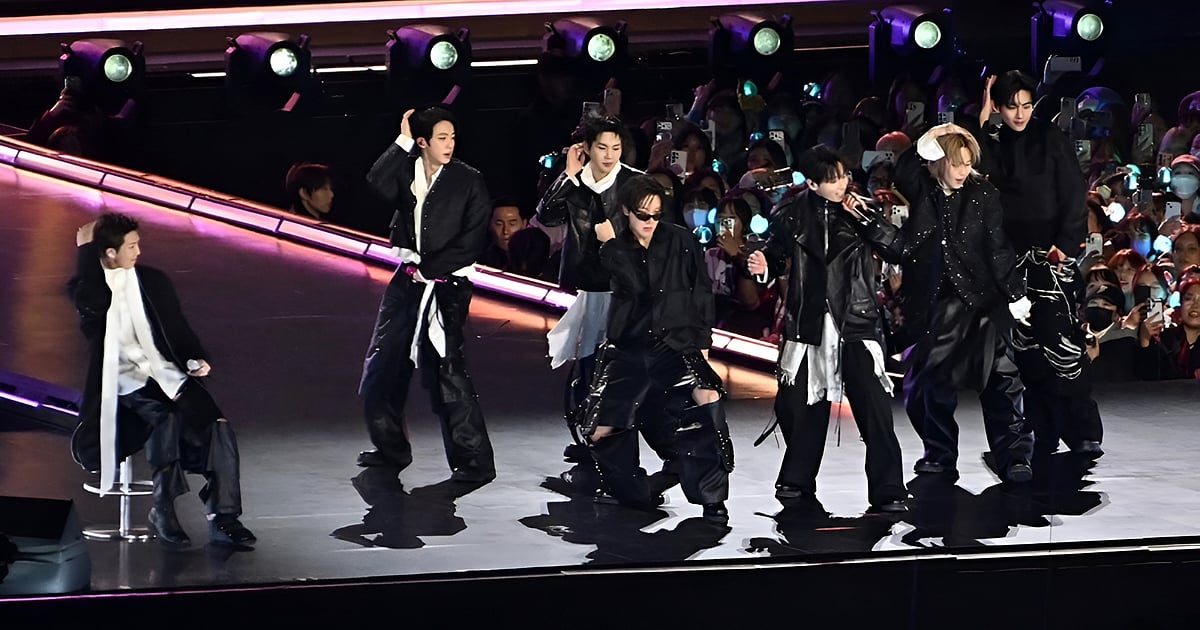
Amidst Arirang Folk Song Transition. Screen Captured from BTS Comeback Live Netflix.
Yet, for all the cinematic polish and minimalist black outfits, the show’s most resonant moments were the unscripted ones, in which J-Hope spoke candidly about anxiety, with RM reflecting on how those very emotions had forged the group’s decade-long path. Notably, RM had sustained a physical injury during the group’s rehearsal and was forced to limit his on-stage participation. Despite the limitation, he participated in the full set with adapted choreography around him, while being seated on a stool, prioritizing his presence for the group's comeback. His injury added a layer of minimal grit to the spectacle, however, he didn't fall short of giving it all in his rap. Additionally, Jimin’s longer hairstyle also became a focal point for a global audience that finds identity in every aesthetic shift.
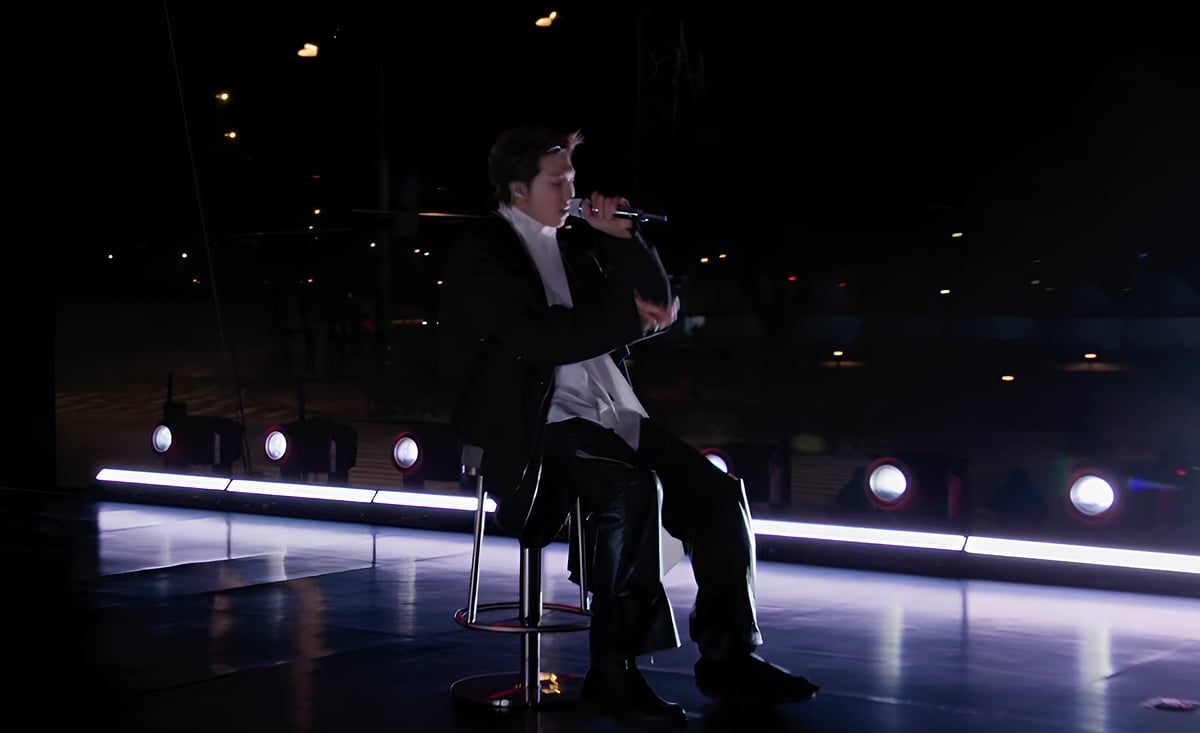
Injured RM seated in a chair while performing. Screen Captured from Netflix Live BTS The Comeback.
This blend of vulnerability, tradition, and spectacle just warmed up the engine that will drive a massive economic machine: the Arirang world tour. As reported by Reuters and KOREA NOW (Yonhap), with 82 shows across 34 cities, BTS’ Arirang world tour is projected to generate up to $1.8 billion USD in direct revenue, contributing an estimated $2B to the South Korean economy (combining Gwanghwamun concert and other South Korean world tour dates). This financial momentum mirrors HYBE’s 2025 revenue surge to ₩2.65T ($1.84B), driven by a 40% increase in high-margin merchandise and licensing, rather than physical sales. Capitalizing on this, HYBE is seemingly transcending from pure physical sales to experience-based revenue, helping the group effectively scale its global commercial footprint.
Are People Misinterpreting Arirang and the Koreanness Highlighted by BTS?
While Arirang sold over 3 million units and topped the charts, its emphasis on English lyrics and short runtimes, a common K-pop strategy for social media virality, has sparked industry controversy about cultural dilution. The lead song, Swim, features a fresh pop structure geared toward global radio, which critics see as a deviation from the group's cultural roots. Nonetheless, according to HYBE's current "multi-home, multi-genre" paradigm, language hybridity is a planned strategic progression, not a cultural surrender. By emphasizing global accessibility through the English language, the organization skillfully removes traditional obstacles for international market growth.
Given the symbolic significance of the album's title, Korean listeners may note a lack of distinctly Korean auditory or visual features. However, despite this, a question remains: What does it mean to be Korean today?
Amidst the criticism of the album's "Koreanness," people are probably overlooking the national symbolism and traditional legacy that existed in the Gwanghwamun’s show production. The show LEDs featured elements of the Korean flag, the geongongamri trigrams (representing water, sky, earth, and fire), and the famous Silla-era Emille Bell chime in the interlude No. 29.
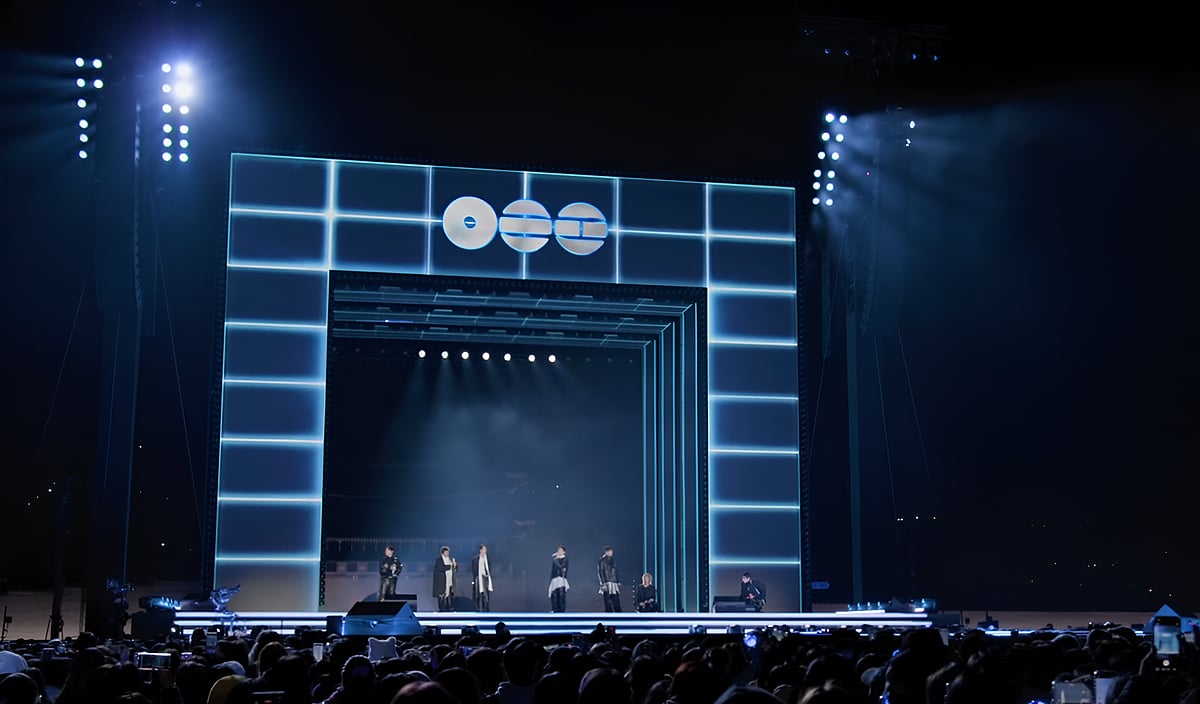
BTS Gwanghwamun Concert Stage. Screen Captured from BTS Netflix Live Show.
Rather than perceiving national identity as static, the group views it as an adaptive, tech-driven global culture bolstered by entertainment and other industries such as automobiles, amongst others. This reflects South Korea's own quick transition from a postwar economy to a digital stronghold. BTS, like artist Hanumankind, identifies as a "rapper from India" rather than an "Indian rapper," uses the historical backdrop of Gwanghwamun to reframe Korean identity as an evolving and expansive cultural ecosystem with dynamic global influence that transcends linguistic particularity.
What Does BTS Gwanghwamun Concert Signal for K-pop and BTS?
The closing remarks at Gwanghwamun Square foreshadowed a larger industry shift toward a unified ecosystem in which streaming, live concerts, and physical commerce operate as a single, integrated engine. In this scenario, the physical album has evolved from a primary audio medium to a high-value cultural object, characterized by speculative desire for collectible items such as photocards, which fuels steady bulk-buying and a thriving secondary market.
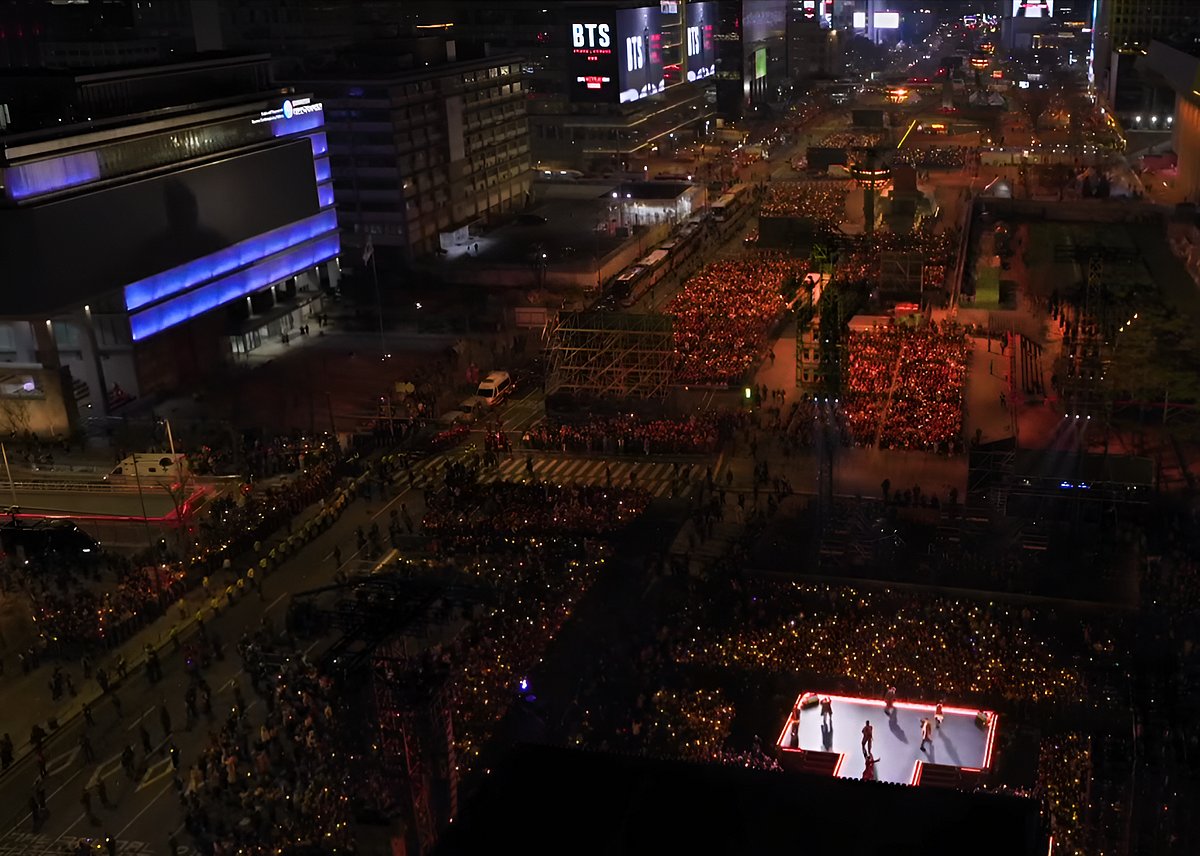
Audience hauling around BTS Gwanghwamun concert stage (on right). Screen Captured from BTS Netflix Live.
Notably, this trend is emphasized by the $1.2B generated globally in 2023, with limited editions accounting for 60% of that revenue. As for the current secondary market, BTS-related demand reached a new high. The group's four-year absence resulted in a 280% increase in resale activity, with rare merchandise including photocards, now fetching between $2,000 and $3,000 (data from secondary and associated markets like kpopphotocard.com and Fashion Chingu), establishing recorded media as a premium high-yield investment.
As a result, by utilizing this hyper-active ecosystem and livestreaming the Gwanghwamun performance, Netflix scored a home run by securing one of the most dedicated fanbases as premier service users. It showcased that K-pop has transitioned from a YouTube-led virality to an OTT-driven distribution and mainstream capture. Aside from this economic framework, the group has definitely evolved from a well-known K-pop act to a true global pop force, redefining what it means to lead a cultural wave in the virtual era, thus emerging as a valuable resource in a capitalist, consumer-driven environment.
Author
Diya Mukherjee is a Content Writer at Outlook Respawn with a postgraduate background in media. She has a passion for writing content and is enthusiastic about exploring cultures, literature, global affairs, and pop culture.


Related Articles