





The global streaming boom exposes a structural gap between production and long-term IP ownership for Korean creators.
Is South Korea Rethinking the Future of its K-Content Industry?
Korean entertainment content is already popular worldwide, however, there is a challenge beyond the screens that the country must overcome.

Highlights
- The biggest K-content challenge is no longer about creating global hits but preserving their long-term value at home.
- As Chinese short-form dramas gain popularity and international streamers hold the majority share in the industry, South Korea is rethinking its global strategy.
- Experts say the next stage of the Korean Wave depends on stronger IP ownership and better distribution power.
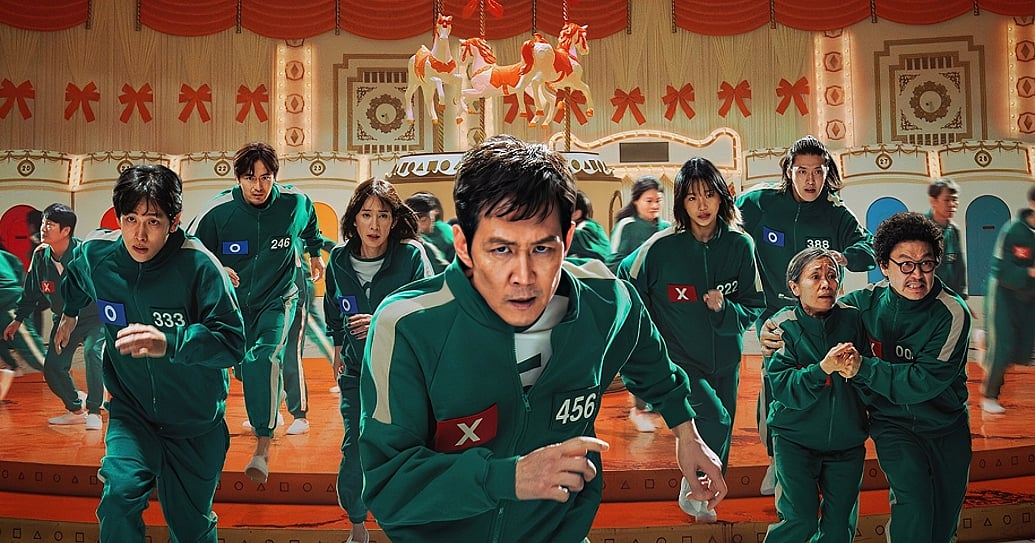
The global success of K-content has made South Korea one of the world's key cultural exporters, however, the industry's biggest financial gains are massively flowing elsewhere. Korean dramas dominate global streaming charts, and franchises such as Squid Game have become worldwide phenomena; amidst this, industry experts debate that the country's long-term challenge is no longer creating hit content. Rather, many are now focusing on retaining ownership of the Korean intellectual properties and associated distribution networks that create lasting value.
That concern has deepened as global streaming platforms continue to fund Korean productions in exchange for worldwide distribution and IP rights. Meanwhile, Chinese short-form dramas, which are all over social media, are rapidly expanding with a business model driven by advertising, micro-payments, and licensing. Together, the trends are pushing policymakers and entertainment executives to redefine South Korea's strategy for K-content global expansion.
Squid Game IP Exposes the K-Content Ownership Gap
The Squid Game IP remains the clearest depiction of the dilemma. The Netflix original became a global cultural phenomenon, but much of its commercial upside resides with the streaming platform, according to the Seoul Economic Daily. Under the prevailing Netflix K-content investment model, the platform typically covers production costs while gaining global distribution and intellectual property rights. Korean production companies get financial certainty, but often surrender the lucrative subsequent revenue streams tied to merchandising, licensing, and franchise expansion. Notably, Netflix is not the only OTT company following this model; Disney+ reportedly also emulates it.
The imbalance has become increasingly significant since the contemporary entertainment business extends far beyond viewership. Industry analysts often point to Japanese franchises as examples of how intellectual property creates enduring commercial value. For instance, over 60% of the Pokémon franchise's lifetime revenue is estimated to come from merchandise sales, while Demon Slayer produced about ¥1 trillion in 2020, which is nearly $6.20 billion USD as per the current exchange rate on today’s date. Out of this trillion yen value, about 90% reportedly came from character goods and licensing, according to a report from Seoul Economic Daily.
Against that backdrop, the ownership of blockbuster Korean franchises is now an important strategic concern. Video content acts merely as the foundation for wider K-content monetization, while true long-term profitability relies on holding the chief K-content intellectual property.
Additionally, current industry pressures expose deep flaws in Korean content distribution, where reliance on foreign platforms for global reach trades upfront production stability for total IP ownership. While the proposed Tving Wavve merger aims to fortify the domestic market, Korean OTT services still lack the scale to challenge international giants.
Chinese Short-Form Dramas Raise the Stakes for K-Content Global Expansion
Competition is also evolving beyond the sectors of television and streaming. The rapidly growing Chinese short drama market has developed dedicated production ecosystems that export one-to-three-minute serialized dramas across Southeast Asia and progressively into North America. Unlike traditional long-form programming, these platforms blend advertising, paid content, and IP licensing into combined business models. These types of frameworks place additional pressure on the Korean drama industry, which has historically specialized in premium long-form storytelling.
Many organizations are also starting to explore FAST streaming in Korea, which is a free ad-supported streaming television method. However, many experts argue that the country has yet to set up a comprehensive ecosystem that is able to support creators, distributors and advertisers at scale.
How Can the Korean Entertainment Industry Secure its Future?
Apart from the market competition, experts are increasingly labeling content as a strategic national industry needing coordinated investment. As reported by the Seoul Economic Daily, government spending on culture has fallen from 1.72% of total expenditure in 2016 to around 1.32% this year, remaining well below the roughly 2% average across OECD countries like the US, UK, Japan, Germany, amongst others. Several experts including academic professors argue that more robust K-content investment is necessary if South Korea hopes to sustain the ownership of valuable IP while fortifying the wider Korean creative economy.
Kim Jung-sup, professor of Cultural Industry and Arts at Sungshin Women's University, told The Seoul Economic Daily that the government supporting individual productions alone is no longer sufficient. Rather, he argued, policymakers should treat production, distribution, platforms, data, and AI in content industry development as a single value chain, backed by cultural finance. According to Kim, this will attract greater private capital and reduce the massive reliance on foreign ownership.
Additionally, Cho Young-shin, an adjunct professor at Dongguk University and chief executive of media and entertainment research firm C&X, believes the next phase of growth hinges on negotiating better terms with global streaming platforms. He also told The Seoul Economic Daily that things like Netflix distribution rights are ultimately shaped by “bargaining power” instead of global standards. This indicates that its recent licensing agreements with major Hollywood entities like Sony and Universal reportedly gained significantly shorter rights windows than those usually given to Korean producers.
Cho compared today's K-drama global market position to the early years of K-pop's international rise. While Korean music companies like HYBE, spent years building global leverage before attaining equal footing with international partners, he argued that Korea’s drama studios must now follow a similar path. They must be expanding their presence beyond Asia while strengthening their negotiating position.

HYBE's headquarters in Seoul, South Korea
All in all, the next phase of global growth for the Korean entertainment industry will depend less on creating another overnight viral sensation and more on guaranteeing that local creators retain the structural wealth of what they build. Transforming a temporary flash of enthusiasm into lasting cultural strength needs substantial capital, staying power, and a government willing to treat content as an important strategic industry.
Over the next decade, the ultimate aim of South Korea could be strengthening local operators with the solid, behind-the-scenes backing required to keep this creative fervor from cooling. This can ensure that when the next world-stopping phenomenon breaks, it is the creators themselves who will finally be in charge of their fair value on the global stage.

Author
Diya Mukherjee is a Content Writer at Outlook Respawn with a postgraduate background in media. She has a passion for writing content and is enthusiastic about exploring cultures, literature, global affairs, and pop culture.



Related Articles