




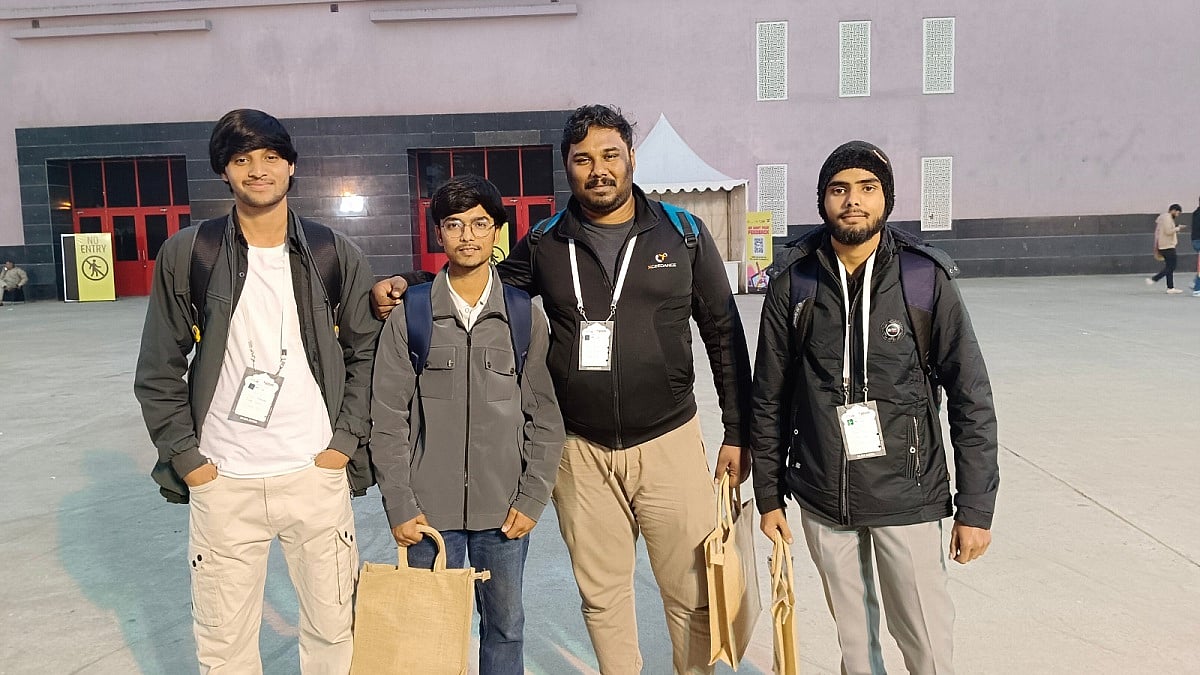
Team Crows at Game Jam Jaipur 2026
Game Jam Jaipur 2026 Changed how Students Pursue Game Development
Through live collaboration, mentorship, and time constraints, the game jam gave Team Code Crows a clearer understanding of how real game development works.

Highlights
- Team Code Crows entered Game Jam Jaipur 2026 to experience real development workflows.
- With guidance from their teacher, Muhil Raj, students applied simplified development cycles.
- The event helped participants gain confidence and understand community value.
Game Jam Jaipur 2026 brought student developers face-to-face with the realities of game creation under strict deadlines and constant decision-making. For many participants, it was the first time their knowledge moved beyond tutorials and isolated practice projects into a shared development space.
Among them was Team Code Crows, featuring Jatin Sharma, Dhruv Vaishnav, and Divyanshu Sharma. They are a group of Jaipur-based students who arrived not to chase rankings, but to understand how real development actually functions. Accompanied by their teacher Muhil Raj from Dicazo Institute, the team treated the event as a learning environment rather than a competition.
Over the course of the jam, they worked through uncertainty and adjusted ideas on the fly. Through interviews conducted during the event, the team reflected on how building a game alongside dozens of other developers changed their understanding of teamwork, responsibility, and creative discipline in ways classroom learning rarely achieves.
Game Jam Jaipur 2026 and Learning Outside the Classroom
The game jam offered students something rarely found in a formal education setting. While classrooms teach tools and theory, development itself often demands fast decisions and uncomfortable compromises.
For Jatin, accessibility was the biggest factor behind attending the event: “I wanted to come to Game Jam Jaipur 2026 because we do not have that many opportunities here,” he said. “This was the first time we got the accessibility.”
Watching global game jams online had helped him understand structure, but experiencing one physically revealed how unpredictable development can be. “I have seen a lot of online Game Jams and IGDC showcases, but I wanted to experience what actually happens,” Jatin said.
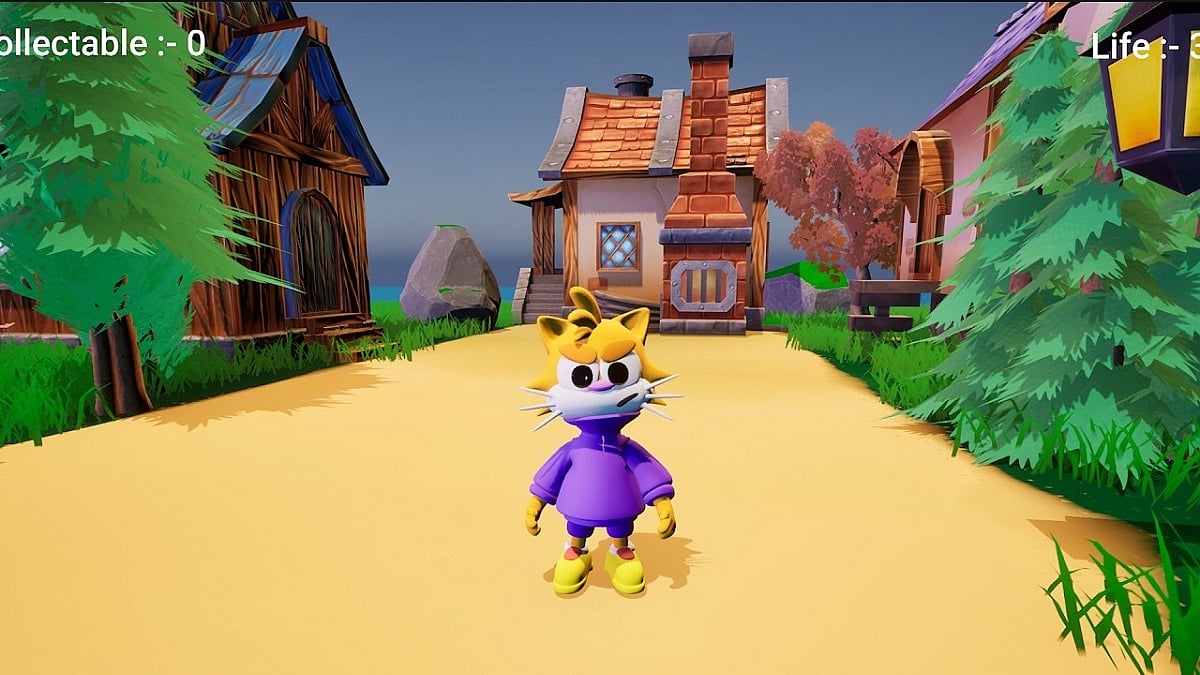
Team Crows
The event exposed students to multiple workflows at once. Teams approached the same challenge differently, prioritizing mechanics, art, or polish depending on their strengths. For many, the jam also served as an introduction to professional networking. Conversations happened organically through shared struggles rather than formal sessions. Developers could learn from each other in real time.
This environment helped remove the isolation many learners face. Instead of working alone, students were surrounded by peers dealing with identical problems, reinforcing the idea that development is a collective process.
Mentorship, Roles, and Real Development Thinking at Game Jam Jaipur 2026
Raj accompanied his students and shaped the team’s approach throughout the event. Having recently graduated himself, he understood both the student mindset and industry expectations.
“I recently graduated from a college in Montreal as a game developer,” he explained. “After returning to my hometown, I wanted to check how capable I am.”
Rather than pushing for ambitious features, Raj encouraged restraint. The focus shifted toward building something functional before expanding ideas. In traditional projects, students often spend ample time planning. During the jam, that luxury disappeared.
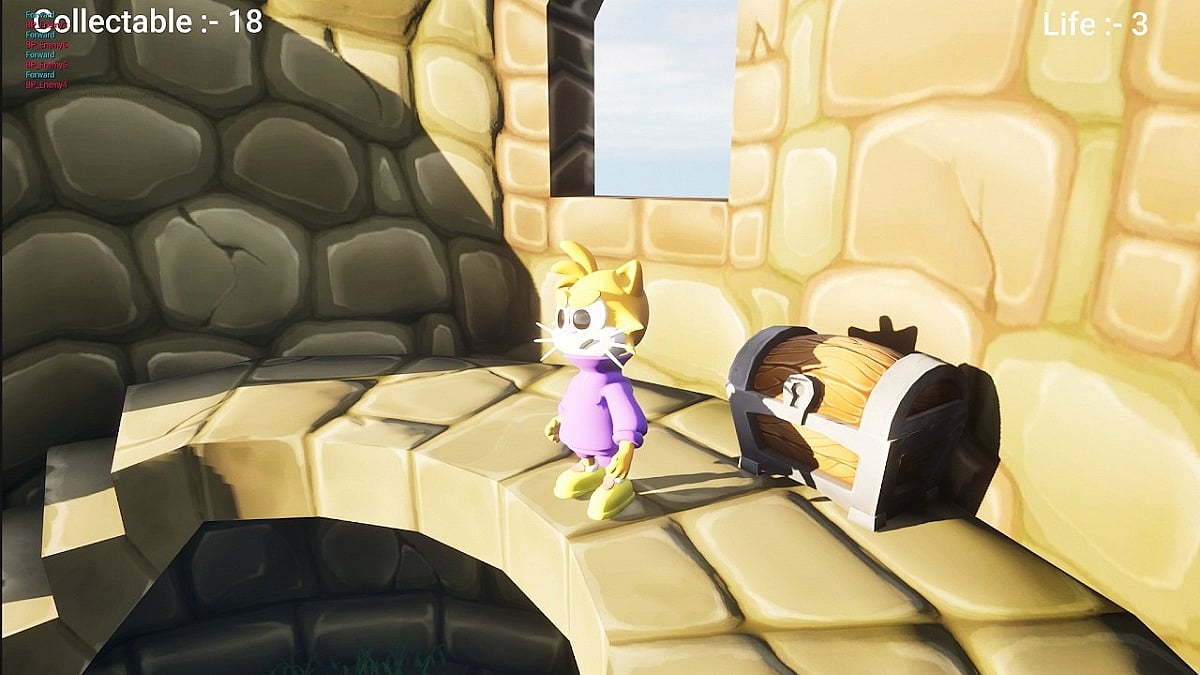
Team Crows
Jatin revealed that it takes up significantly more time in a normal environment to push out a project, but his team had to deliver results in a single day, which made him change his approach. They completed one section at a time, tested it, fixed issues, and only then moved forward. “For example, we make a level and complete it. If the mechanisms are working and there are no glitches, then we move on to the next level,” Jatin explained.
Choosing a platformer helped maintain focus. The genre allowed experimentation without introducing unnecessary complexity. The team could implement simple mechanics and create a functional game in the small time window.
Roles within the team were clearly defined. Divyanshu handled 3D assets and Vaishnav focused on level design, while coding and mechanics were managed by Jatin and Raj. This structure allowed faster progress and introduced students to responsibility-driven development rather than being in individual, isolated roles.
Confidence, Inclusion, and What Comes Next
As the jam progressed, confidence became one of the most noticeable outcomes. Divyanshu felt that the exercise helped build confidence. The experience also helped students understand long-term value beyond the event itself. “If we are trying to move ahead in the game development industry, this is a good start,” he added.
Mentorship played a significant role in shaping that outlook. Feedback from mentors offered direction rather than judgment, helping students think beyond the immediate build. Divyanshu was thankful for the learning experience at the event from the mentors.
Discussions during the interview also explored gender representation in game development. Raj reflected on his college experience, noting a visible but informal divide in learning preferences. He observed more women in digital design and 3D art and more men in technical disciplines like programming.
Despite this pattern, he emphasized that collaboration across genders already exists within academic spaces and is gradually becoming more normalized through group projects and game jam environments.
For Team Crows, Game Jam Jaipur 2026 functioned less like a competition and more like an early checkpoint in a game. It gave students a realistic preview of the expectations that come with game development, long before stepping into their roles as professionals.
Author
Abhimannu Das is a web journalist at Outlook India with a focus on Indian pop culture, gaming, and esports. He has over 10 years of journalistic experience and over 3,500 articles that include industry deep dives, interviews, and SEO content. He has worked on a myriad of games and their ecosystems, including Valorant, Overwatch, and Apex Legends.
Abhimannu Das is a web journalist at Outlook India with a focus on Indian pop culture, gaming, and esports. He has over 10 years of journalistic experience and over 3,500 articles that include industry deep dives, interviews, and SEO content. He has worked on a myriad of games and their ecosystems, including Valorant, Overwatch, and Apex Legends.