



Highlights
- GameEon Studios raised INR 9.78 cr ($1.012M) from investors without shipping a single public build.
- The studio's peak burn year was FY22-23, when INR 4.52 cr ($468K) was spent on salaries alone across a team of 55 people.
- Four engine transitions across five years cost the project years of development time it could never recover.
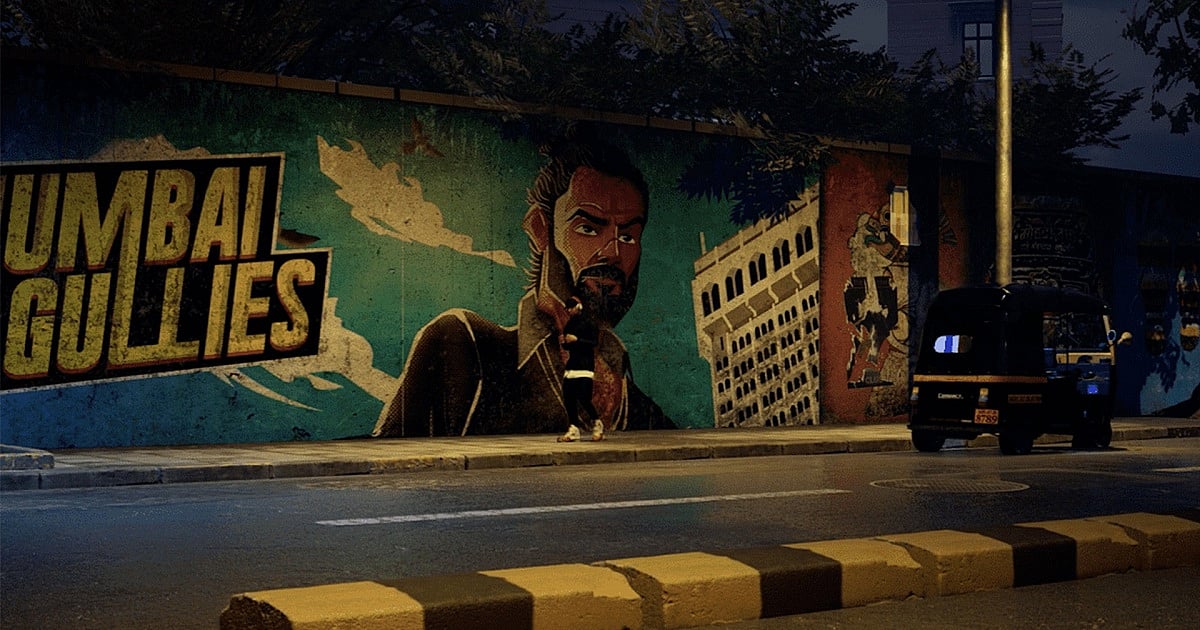
In January 2021, a trailer dropped on the internet, and a lot of Indian gamers lost their minds. It showed a detailed recreation of Mumbai, its streets, and its chaos rendered in Unreal Engine with a level of visual fidelity that nobody expected from an Indian studio. The project was called Mumbai Gullies. The studio behind it was GameEon, based in Mumbai, founded and led by a developer named Nikhil Malankar. And for a moment, it felt like something was genuinely about to change in Indian game development.
In May 2026, Malankar posted a video announcing that Mumbai Gullies’ development had stopped. Over several weeks, he posted several videos where he laid out the full financial breakdown of the five years between that viral trailer and the day everything came to a halt. The financial numbers he shared are real, audited, and reviewed by investors. They are also, when read carefully, a detailed account of how a project with genuine promise was dismantled by a series of decisions that compounded over half a decade into an outcome that was probably avoidable.
How Mumbai Gullies Started
Malankar started making games in 2013 with no funding and no team. The original idea, building an open-world game set in Mumbai, was in his head from the start. But the path to it was long and unglamorous. To survive, GameEon built over 150 mobile titles. Dozens of hyper-casual titles that most people would never hear of, but that kept the studio alive and operational.
By the time serious development on Mumbai Gullies kicked off in late 2020, he had built a profitable mobile games business from scratch with no outside money. He had also built a YouTube channel around game development that had grown to 20K subscribers, a community he credits with giving him the courage to attempt something at this scale. The community now sits at over 117K subscribers.
GameEon Studios
Before approaching a single investor, Malankar invested INR 2.36 cr ($244.3K) of GameEon's own earnings into the early development of Mumbai Gullies. That money funded the concept work, the prototyping, the research and development (R&D), and the initial team. It came entirely from years of mobile game revenue and B2B contracts. He did not go to investors and ask them to fund a dream. He funded the dream himself first, proved that something real could be built, and then went looking for capital to scale it.
When the January 2021 trailer landed, and the internet responded the way it did, Malankar had his proof of demand. In September 2021, GameEon received its first round of external funding. That same year, Malankar announced a two-part release plan at India Game Developer Conference (IGDC), India's largest event for devs. The project had momentum, a team, and it looked like the game would actually ship someday.
GameEon’s First Mistake: No Safety Net
Mumbai Gullies was conceived as an open-world, narrative-driven, third-person action-adventure game set across multiple eras of Mumbai. That is a category of game that studios with ten times GameEon's budget have struggled to ship. Malankar knew this and severely underestimated how hard it was going to be. In 2022, the studio migrated from Unreal Engine 4 to Unreal Engine 5. On the surface, this made sense to move to the newer engine with better visual fidelity. It was what started drawing the comparisons to AAA titles.
GameEon Studios
But UE5 development is expensive in ways that are not subtle or unpredictable. It demands more from hardware, more from artists, more from programmers, and more from the studio's bank account at every stage of production. This was not unknown information in 2022. It was being discussed openly across game development communities worldwide. Choosing to migrate to UE5 mid-development, without having first secured the level of funding that UE5 demands, was a planning failure dressed up as an upgrade.
The financial profile of the project changed permanently at that moment. The INR 2.36 cr ($244.3K) that had been enough to get things off the ground was no longer enough to sustain the burn rate of an open-world UE5 project. The studio was now entirely dependent on investor capital to keep going. That is a fundamentally more fragile position than where they started, and the fragility was self-inflicted.
The Year Everything Compounded
FY22-23 is the year that, more than any other, explains what went wrong with Mumbai Gullies. The studio was running a team of 55 people that moved into a bigger office. It had committed to UE5, and the numbers from that year reflect all of it.
Total expenses hit INR 4.52 cr ($468K), the highest single-year spend across the project's entire life. Of that, INR 3.08 cr ($318.9K) went to salaries across seven departments. Core development received INR 1.36 cr ($140K). Art and sound took INR 87.60L ($90.7K).
Revenue that year was INR 1.03 cr ($106K), and funding received amounted to INR 1.16 cr ($120,120). The loss for the year was INR 3.5 cr ($362,431), the largest annual loss the studio would ever record. Malankar admits in his financial breakdown video that in FY22-23, after the funding round closed, he gave salary hikes to team members that he later said he should not have given, or at least should have phased out more carefully. The company had just been funded, people in the company expected recognition, and he wanted to retain the talent he had already invested in developing.
Those hikes shortened the runway in ways the projections had not accounted for, pushed the studio deeper into dependence on future capital, and contributed directly to the funding crunch that followed. It was a decision that, layered on top of the UE5 migration and the team expansion, left the studio with almost no margin for anything to go wrong.
Investors allegedly did not keep their promises and delayed funding by up to 11 months, according to Malankar. Vendors went unpaid. Team members left. The prologue that was supposed to launch that year did not happen. The studio was, by the CEO’s own description, too busy surviving to ship anything. By the time the money came through in December 2023, a full year had been lost.
The question this period raises, and one that Malankar does not answer in his videos clearly, is why the funding agreements were structured in a way that left the studio entirely exposed for that long. Milestone-based disbursements exist precisely to prevent this scenario. Bridge financing exists for gaps between commitment and arrival. That neither mechanism was in place, and that no contingency had been built for a delay of this magnitude, points to a level of financial planning that is hard to overlook in a studio managing nearly this much capital.
The Unity Disaster
In 2024, GameEon rebuilt itself after its financial troubles. They took the game to the Game Developers Conference (GDC) in San Francisco. Shuhei Yoshida, then head of Sony Interactive Entertainment's independent developer initiative, visited their booth and expressed genuine interest. They tested the game across twelve countries with feedback from more than 5K players and raised another round of funding.
GameEon Studios
To manage costs, Malankar made the decision to outsource development to external partners and switch the engine from Unreal Engine to Unity. Unity had a wider talent pool, and the outsourcing partners had deep Unity expertise. Fixed outsourcing costs are easier to manage than the variable costs of an in-house team when a project keeps getting delayed. However, the decision nearly destroyed the game.
Mumbai Gullies had been marketed, discussed, and anticipated entirely based on its Unreal Engine visuals. Those visuals were the reason the 2021 trailer trended, and many hailed it as India’s first AAA game. Moving to Unity meant the studio could no longer deliver at that visual level. The product that would have shipped was not the product the community had spent three years waiting for.
Malankar recognized the damage and switched back to Unreal Engine. The right call creatively. But by then, the project had moved through four engine transitions: UE4, then UE5, then Unity, then back to Unreal. Each one costs months that could never be recovered. The Unity detour alone represents a window of time and a large sum of money spent moving backward.
The Final Year for Mumbai Gullies
FY25-26 was the last financial year before development stopped. No external funding came in, and all revenue came from B2B projects to keep the studio afloat. It made the highest annual revenue figure the studio had recorded across the entire project's life, but it still made a loss of INR 39.6L ($41K), the smallest since the project began. The studio had, finally, gotten its costs under control.
Total salary spend for FY25-26 was INR 61.4L ($63.5K) across the remaining team. Of that, director remuneration for Malankar and his sister accounted for INR 26.6L ($27.5K), or 43% of the total salary budget for the year. Malankar is transparent about this and notes the small increase from the prior year came from a hike his sister took. But the proportion is worth sitting with. In the studio's final year, in its worst funding environment, with the smallest team it had ever operated, nearly half the salary budget went to its two directors.
Across five years, the total picture is this. GameEon raised INR 9.78 cr ($1.01M) from external investors. It generated INR 2.86 cr ($296K) in post-funding revenue. It recorded a total net loss of INR 10.4 cr ($1.07M). It accumulated approximately 16K wishlists on Steam after five years of trailers, showcase appearances, and national media coverage. It never shipped a single public build.
Malankar is right about some things. He did not misuse investor funds. He took on personal loans to keep the project alive when everything else had failed. He is also right that Mumbai Gullies proved something about what Indian developers can build. But the collapse of Mumbai Gullies is not only a story about one studio and one founder. It is a story that will now follow every ambitious Indian developer who walks into a room with an original IP pitch to for institutional capital.
The investors who funded GameEon across multiple rounds will be in that room. The memory of five years, four engine switches, INR 10.4 cr in losses, and zero shipped builds will be in that room. The lesson Malankar offers at the end of his video is scope smaller, ship faster, protect your runway. The painful part is that those lessons were available in 2022, in 2023, in 2024, and at every inflection point where a different decision might have produced a different outcome. The gap between knowing something is hard and planning for just how hard it actually is turns out to be exactly where projects go to die.